My adopted family got together this week in a small town in Pennsylvania to celebrate a marriage that took place some time ago. My understanding of family has been evolving greatly over the past few years, and I feel compelled to share what it means to me.
My birth parents never divorced; I want put up for adoption; I wasn’t orphaned. I wasn’t from what would be considered a broken home. But there was something very broken within the family situation that left me scarred.
When I met my best friend, just over ten years ago I found someone who was a mirror to me. She validated much of my life story. She helped me to become self-aware. But in the process of finding myself and becoming an individual, my birth family became more distant.
I found that I was a branch on my family tree that was no longer being nourished, but I was also part of a tree that refused to accept the love and nourishment that I had to offer.
A branch that is no longer nourished will not survive.
And this is where my friend’s family stepped in. When they were in need, they permitted me to be a part of that family and fill the needs that I could fill.
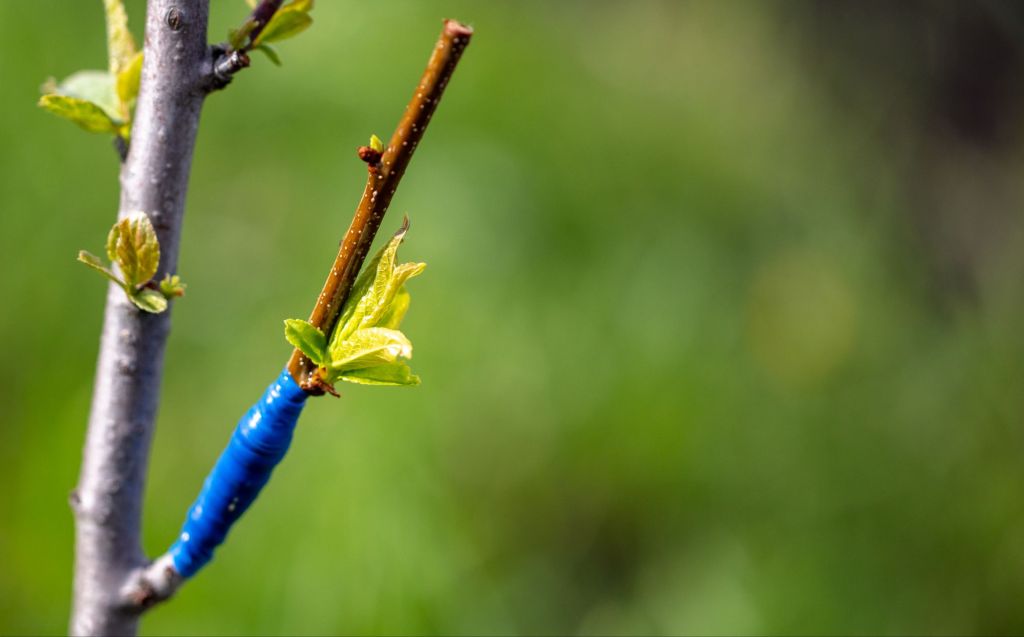
A grafted branch on a tree is a unique relationship. It receives nourishment from the roots, but it also contributes to the health of the tree via photosynthesis. It’s genetics is different from the rest of the organism, but once grafted it has become somewhat interdependent – it is a relationship in which all benefit, and if severed, all will suffer.
Where my birth family severed a relationship, this family took that wounded branch that is me, found a place in the midst of their own struggles and pain, and permitted me to be grafted into this beautiful tree.
This is what love is. This is what love does.
I still marvel. I recall a visit to my birth parent’s house some years ago with my best friend, before I could fully comprehend that I was no longer really welcome, and I still recall the uncomfortable feeling of distance. And in my mind as I sit writing this I contrast that feeling to my experiences over this past week and I cannot help but note the difference. While with my new family, I was at ease and comfortable. There were no suspicious glances, no lack of trust. I was at home.
I have sisters and family who genuinely care about me. (To be absolutely fair, I do have a birth brother who I have a close relationship with, but even he and I have never been able to achieve the level of closeness that I have with my adopted family; perhaps there is still too much unprocessed trauma there – it’s difficult to say. But there is love. )
The point of all of this though is that I see I am part of something more now. Where once I felt as if I were an interloper I see now that wasn’t the case at all; I was a scion, a small branch removed from where it has been struggling, and carefully grafted into a place where I could not only thrive individually, but be there for those who love and accept me.
Grafting is a process that involves wounds, but when done correctly both the scion and the tree benefit. I think this is the case with the family I’ve been grafted into.
To my grafted family, thank you for loving me. Thank you for giving me a place to grow. Thank you for giving me a place to heal.
When Jesus uttered these words he likely shocked his followers – certainly the proper order was for children to emulate adults, and not the other way around. Adults were the teachers, children were to learn, and to upset that order shouldn’t be done.
Just like a Child
In his book Spotting the Sacred, Bruce Main speaks of being childlike, but he points out one quality that has always meant a great deal to me in chapter 5 when he speaks of “unrehearsed congruence”. In the section where this term is used he is referencing the spontaneous prayer of a child and its effect on a man who heard that prayer.
I have in my own life often wished that I could find that spontaneity. Growing up, spontaneity and improvisation were things I could ill afford lest I show too much of myself. Being myself instead of who I was permitted to be resulted in harsh punishment. I learned to be aware and in control of what I said, how I moved, who I was with, simply so I could avoid beatings or other punishments. What I lost was spontaneity and authenticity. I managed to hold on to my curiosity, but it needed to be restrained to areas that were”acceptable”.
I also avoided children; not because I didn’t like children, but because I was told that people like me – people who struggled to simply be who they were told to be, would grow up to be the sort of people who would abuse children. Even around my own daughters, finding spontaneity was not possible. The fact that the individual who told me this was a serial abuser should have meant something. But in avoiding children, I lost something that has taken me many years to rediscover.
At the same time, being raised in a controlling and abusive environment, and finding recovery afterward has taught me something important; resiliency isn’t something that need be lost forever.
I found that one enemy of resiliency is resignation, while the path to resiliency, and to the Kingdom, as Jesus put it, is to “become like a child”. In my own case, that path involved the most child-like act of finding a friend; of being open to a relationship, of trusting.
For survivors of trauma, trust can be a dangerous word. For many of us, often as children, our trust was, in many cases, betrayed. We are not given as adults to trust easily; it is something we must re-learn. We must “become as children”, not entirely, but at least in part.
I have also found that in “becoming like a child”, at least in learning to trust, I have also learned to feel more deeply. I can feel joy, sorrow, and especially love much more deeply and viscerally than I could before. When I had put aside not childish, but childlike things, I had also walled myself off from being hurt. After all, big girls aren’t supposed to cry over little things, or things that are long past; at least not if we’re “emotionally stable”. But being childlike is a recognition that the “rules” of adulthood, especially our Western, puritanical, capitalist, ‘drag yourself up and get on with it’ attitudes, are mostly bullshit, and terribly harmful to the human condition. Rather than helping us heal and move on, these attitudes leave us with emotionally disfiguring scars and festering wounds as we seek to navigate life pretending that all is well and that we need no help or compassion.
In ‘becoming like a child’, we’re able to reach out when we need help and when we see another in need. We discover, at once, compassion and resiliency because they are both sides of the same coin.
Real healing looks different. Those who heal still carry reminders of past trauma, but it doesn’t leave them broken and disfigured with wide-open wounds. Instead, the stories of past trauma are woven into a rich and colorful tapestry that radiates strength and hope and which is a celebration of life. This isn’t to say that one must experience trauma in order to fully experience life; rather, I’m saying that those who have found a path to healing learn to integrate their previous experiences, even the traumatic ones, into the fabric of their being in such a way as to make that resulting tapestry more beautiful, richer, and stronger that it otherwise would have been.
We need to understand too what real compassion looks like. This is another part of us that has been harmed with our modern, puritanically and capitalistically influenced way of thinking. Too often when we hear of another’s problems we are quick to offer advice or solutions and forget that what many really need, especially early in their struggles, is to simply be heard and understood. When someone is facing, for example, a life altering medical diagnosis, they will certainly hear from many about the benefits of CBD, herbal remedies, and countless people who recommend some specialty treatment. Often though, what someone really needs is someone to simply hear them and to give them the space to come to terms with the change that is taking place in their life. What they need is a compassionate listener. What they need is a friend who will simply be there.
As children, there were many times when our friends could not solve our problems and we could not solve theirs. Often enough, our problems were their problems too. But those problems became easier to bear because those friends were their. When we can regain that childhood trust in each other and make each other’s lives easier, we are discovering part of what it means to “become like a child”.
Recently I was occasioned to take part in an extra-judicial proceeding that dealt with some abuse I experienced as a child. Alone, the experience would have been much more than would have been bearable in a healthy fashion. But I asked my best friend if she would be with me, and she went. What might have been a terribly stressful experience became instead something that was also healing, despite it’s nature, for both of us because the experience was shared. It brought us closer; we learned more about ourselves and about each other.
Perhaps that’s yet another part of both being childlike and resilient – being able to continue to grow and heal, to recognize our weaknesses, to know that there is yet much we can’t do alone. Sometimes we need to be content to wait and find what peace and joy we can in the here and now, despite what seemingly integrate things may otherwise be happening. Earlier in the book of Matthew, Jesus gave his familiar parable of the lilies of the field which neither spin nor sow, yet are dressed in more splendor than Solomon himself. They don’t toil, but God provides for them. Jesus’ point was not that one shouldn’t ever work, but rather that work and effort extended solely for the purpose of vanity was unnecessary. When we look at young children, we don’t see them worried about how they or their friends look; instead, what matters is the quality of the friendships they make, whether they play well together, whether they share, whether they care.
It’s only as we become older that physical beauty begins to take on as much, or in some cases more importance than inner beauty. It seems that we are taught to find distasteful those who do not conform to a particular aesthetic. We can become more like children by worrying less about physical appearance – our own as well as that of others, and more about character – especially our own.
Children are thirsty for knowledge. They are naturally curious about everything. They aren’t satisfied with “just because”, nor should we be. It may seem more grown up to not ask “why”, but perhaps that’s one reason we’re in such a mess right now. Maybe we need to ask “why” more. Why can’t we have something like a National Health Service in the US? Why do we need to rely so heavily on oil and the resulting pollutants? Why can’t we have clean air and water? Why can’t we have equal rights for all? Why must we fear that the rights we do have will be stripped away?
The difference we have was adults is that along with our childlike questioning, we also have adult autonomy. We can change our world, and we can change ourselves. While we may not be able to change our past, we can still correct the deficiencies we may have had in our upbringing. If there were things we didn’t learn, we can still learn them. If we were lacking the love of a family, we can yet find even that – this I can promise you because it happened in my own life.
What I can say about my life is that every truly good thing that happened to me began when I had trust, like that of a child.
Some years ago I used to have a radio show. I used to do a segment called the Practical Pagan, and a few other segments where I discussed things of topical interest. I’d also do interviews, music, book, and film reviews, and other items of interest to the Pagan community. Once, a listener asked how I was able to find something to write about every week.
I’ve spent much of my life journaling, and now I’m writing for this blog on a daily basis. I may not post daily, but I am writing daily. And I keep a backlog of posts started. When I come up with an idea, I list it as a title and come back to it when the time is right. I’ve also got a number of books in the works. But having something to write about, having a reason to write, even having a deadline, these don’t offer inspiration – they don’t give you the drive to write.
It’s the same with art or music; we can want to paint, draw, or playing am instrument.
In the video clip above we see Gene Kelly and Olivia Newton-John in the 1980 film Xanadu. Olivia is playing a woman named Kira, and Gene, a big band leader named Danny McGuire. The film also stars Michael Beck, an artist who finds himself struggling and unfulfilled, creating album covers rather than doing the sort of art that would inspire him.
Both men meet Kira, but Danny remembers her from long ago. Eventually in the film, Kira reveals herself to be the must Terpsichore, from Mount Olympus, and she was there to inspire both men. By the way, this was Gene Kelly’s final film appearance, and featured not only Gene Kelly and Olivia Newton-John, but the music of Electric Light Orchestra, and it features one of the best fusions of big band and rock that I’ve ever heard. The soundtrack album went double platinum in the US, so the film and the music are worth a bit of attention.
Of course life isn’t like film or Greek mythology. There are no Gods on a mountain waiting for the right incantation in order to help us. In my experience even having a regular spiritual practice is something we can struggle with.
So what is the answer? It’s going to sound really silly at first, but it’s the honest truth. Inspiration comes from doing what we want to do. But there is an important key, especially early on: do it without judgement. Certainly you can watch your progress, and at some point you can device whether you’re comfortable sharing your work with others. You will want to continue honing your craft of course, but the more you do, the more you’ll want to do. It becomes a matter of habit.
And worry not, dear reader, you in the back who thinks to stump me with your clever question. What of the writer, or artist, or musician, or anyone whose well has run dry? In general, I see a few reasons for this, though there may be more. In my own life this can happen when I left myself become too busy with other things, when I am forced to be creative with insufficient time to do so. It’s not that the muse has left, so to speak, but that my mind is too disquiet to relax and listen. I am too anxious to be inspired.
Another thing that can happen is that I can simply take a break for a while and allow myself to get out of the habit. It is easier to remain creative than it is to re-engage that productive creativity that has remained idle for too long. It’s kind of like Newton’s first law of motion applied to creativity; a creative person will tend to remain creative as long as they keep creating being creative and the act of creating reinforce each other.
Almost every writer can recall a project they began with enthusiasm, but at some point became distracted from, while we were engaged, the words and pages came easily, it might have seemed that rather than creating, we were merely reporting on things we were witnessing unfold in our minds. Then came the distraction. Work, children, illness, family emergency, it may have been utterly out of our control. But re-engagement with those characters or the project can be terribly difficult – much more difficult than the initial work. The initial work might have come about organically. Now, we need to rediscover a thread in a wilderness. But it can be done. One recipe for this is too avoid writing right away. Instead, I take some time and read what I have. I don’t try to proofread. I don’t try to imagine next steps. I try to feel and immerse myself into the story so that I can get somewhere near to the intimacy I once had with the characters and the plot.
Something you can try to avoid stagnant projects in the first place is to pull them out and read them periodical. If you’re a musician, or a painter, play them, put them on an easel every now and then, keep them fresh in your mind. It will make those projects much more easy to return to in the future.
The final reason I’ll offer for dry spells is this: being comfortable. It can be very comfortable to do what we’ve always done, to have a formula that had worked for us, a well from which we can draw that always yields success. But sometimes this sort of well might not be deep enough to last indefinitely. Sometimes we need to be able to draw from multiple wells.
For writers, if we’ve been limiting ourself to poetry, we can try our hands at prose. If we’ve been writing non-fiction, we can write some fiction.
Here’s an idea: Try taking a short story someone else wrote, one that you haven’t read and read half of it. Take the first half, and finish the story as if it were yours. Then read the original authors second half. How did you agree? How did you differ? What do you like about your work and the original author’s work.
If we write music, we can try another style. If we play an instrument, maybe we can learn another. If we’re am artist, we might try a new medium, or changing up a style, or trying to impose a limitation such as making a painting using only red, yellow, black, and white.
Getting out of our comfort zone helps us to think differently, and thinking differently is fundamental to creativity. Every engineering accomplishment that we benefit from has come about because somebody thought about a problem differently. The same is true for art and the written word. Every new thing comes about because somebody thinks differently.
The only people who dare say “there is nothing new under the sun” are those who look at things as they always have. If we’re willing to see things differently, there is always something new
 Morning Musings