Let me start by saying that Charlie Kirk is someone I would never have had as a friend, and I’m certain he would have never even considered having me as a friend. He was arrogant, self-righteous, bigoted, and a top notch boor.
But he didn’t deserve to be murdered.
Whoever it was that killed him deserves whatever becomes of them. They not only took a life, but they have inflamed the rift between left and right. We on the left abhor gun violence. We abhor the taking of lives. We don’t wish to see people needlessly die. And whatever I thought of Charlie, I much more wanted to see him get his ass handed to him by real and legitimate intellectuals than to have him shot by some ignorant ass today.
Charlie represented much of what’s wrong with Christian nationalism. He was among the worst. But he didn’t deserve to die. I hope that in his next life though, he’ll come to embrace love over bigotry.
I’m a Quaker, and most of the time, I ride my bicycle to meeting. Today, when I got up, it was raining, and while I could have taken a bus or found some other means to get there, I rode my bike.
Riding usually helps me clear my mind. Even when politicians are bent on harming or eliminating swathes of our population, even with economic uncertainty, riding can often help me to clear my mind.
Today, my mind has been troubled. As a Quaker, I believe that there is that of God in each of us – some spark of human divinity or divine humanity that is able to enlighten every single person on Earth. But I am also intersex, and because I’m not living in the gender that I was assigned at birth, I’m also trans. And living under a regime that considers me a terrorist simply for that, I have difficulty seeing that divine humanity in some people.
Still, I’m a Quaker. It’s not up to me to ignore that spark of the divine in those who would wish harm upon me. Instead, I need to recognize the wounds that render such people incapable of finding that of God within themselves.
The human part of me can lead to dark places. I can be led down a road of anger, resentment, or even self-harm. But there is that spark that lives in me that will, when I listen to it, when I give it the fuel it deserves, when I provide it kindling and let it burn within me, show me another way.
In the rain, I can take what many see as unpleasant, and i can let it wash and cleanse me. I can ride and clear my mind.
A friend once wrote of the rain, saying, “Me, I’m not alone. I have the rain. I have my soul set free. ” And I suppose that’s a lesson for me. Rain can upset some people. It can stop some of us in our tracks. But, at least for today, it washed me; it was my friend.
And that, sometimes, is where riding in the rain leads me.
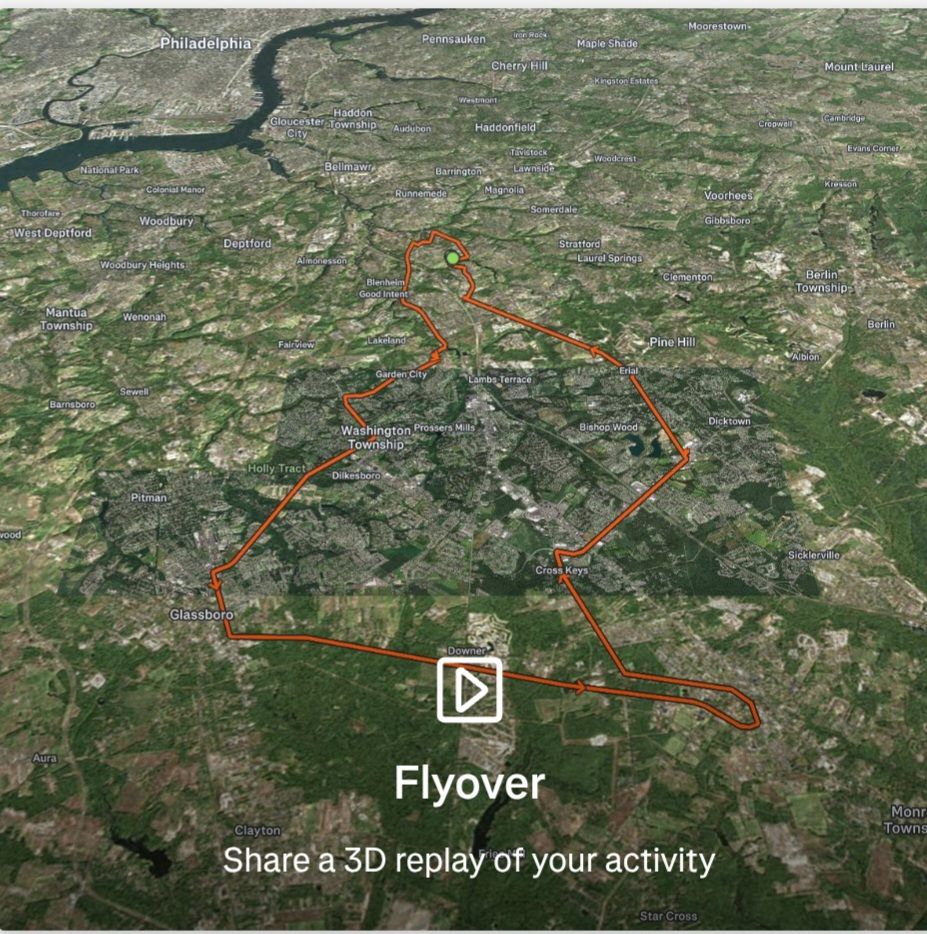
Saturday, August 30 was my first longer ride after turning 65. I was looking at a map and noticed a bike trail from Glassboro to Monroe Township here in New Jersey. So I planned a route from home in Blackwood that went down the Gloucester Township trail trail. From there i went to Washington Township, and from there to Glassboro. Taking a left, i was on the paved trail, which is wide enough for multiple riders. Along the way, I met a police officer diving his car on the trail. This officer was friendly and polite, and it gave me a good feeling to note that this trail, with most of it through wooded areas, was regularly patrolled. The trail has a number of benches and trash cans, which makes for nice places to stop for a snack and keeping the trail clean.
I’m sorry for being away for a while – we sometimes become busy, take on other interests – life changes. And perhaps that’s what I’ll talk about, in a way, today.
I’ve been riding my bike this summer, a lot. In the past few months, I’ve ridden more than 1,000 miles. It’s how I commute to work, to Quaker meeting, and it’s how I’ve been exploring the local area. I’ve seen some lovely things.
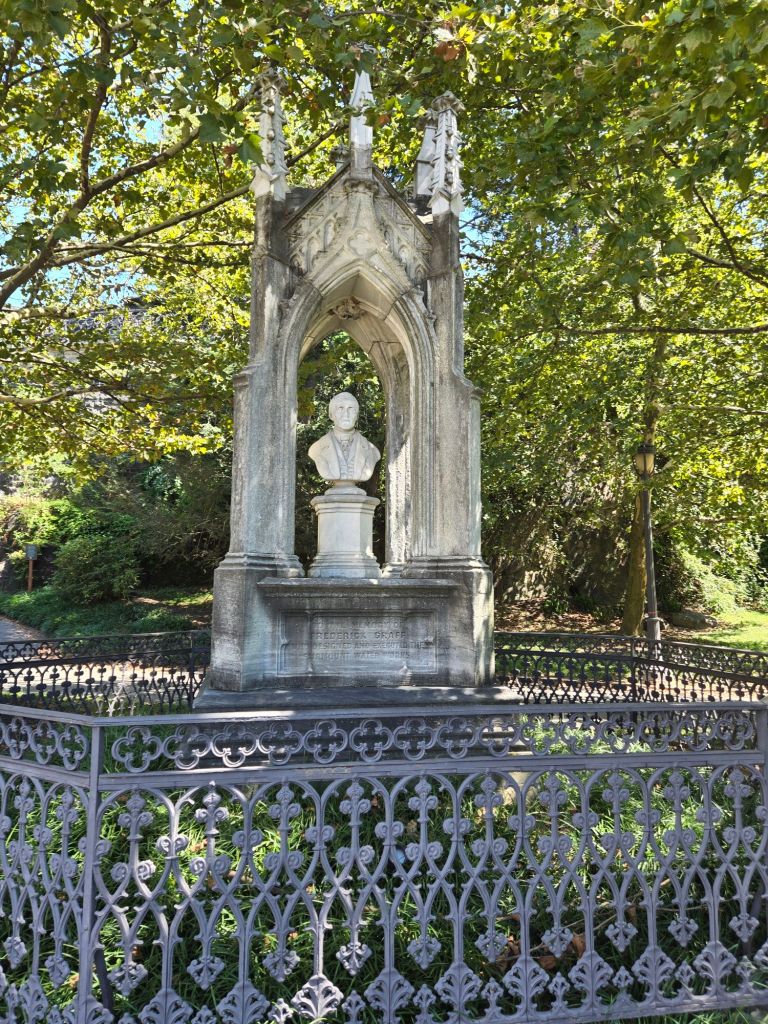
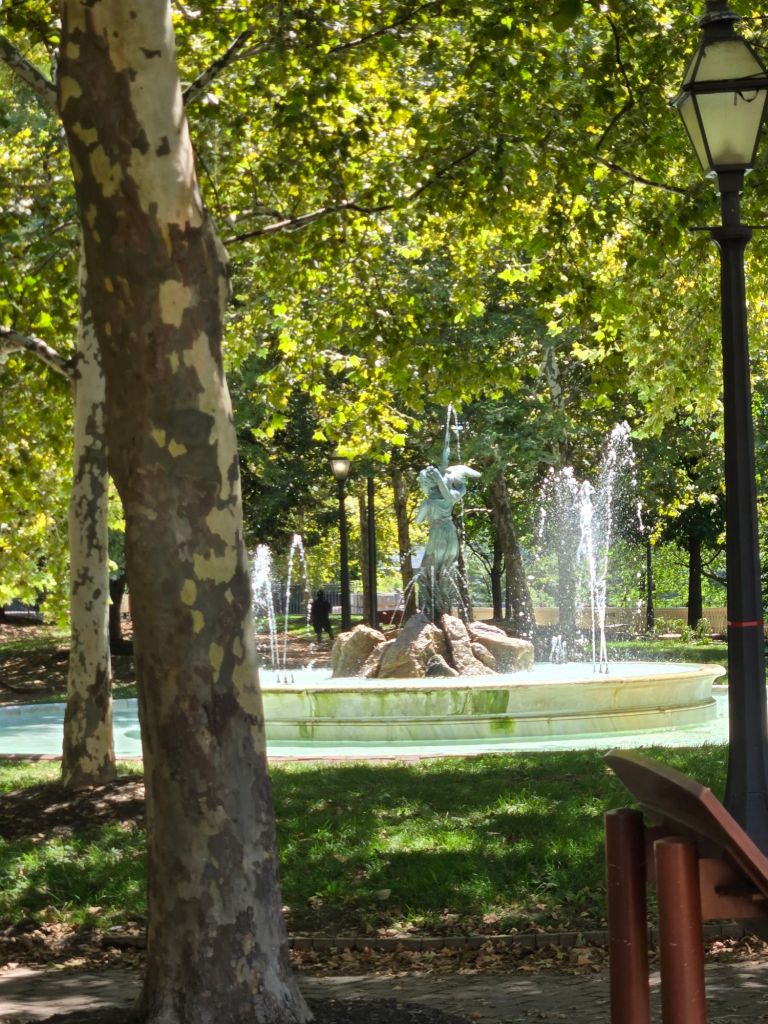
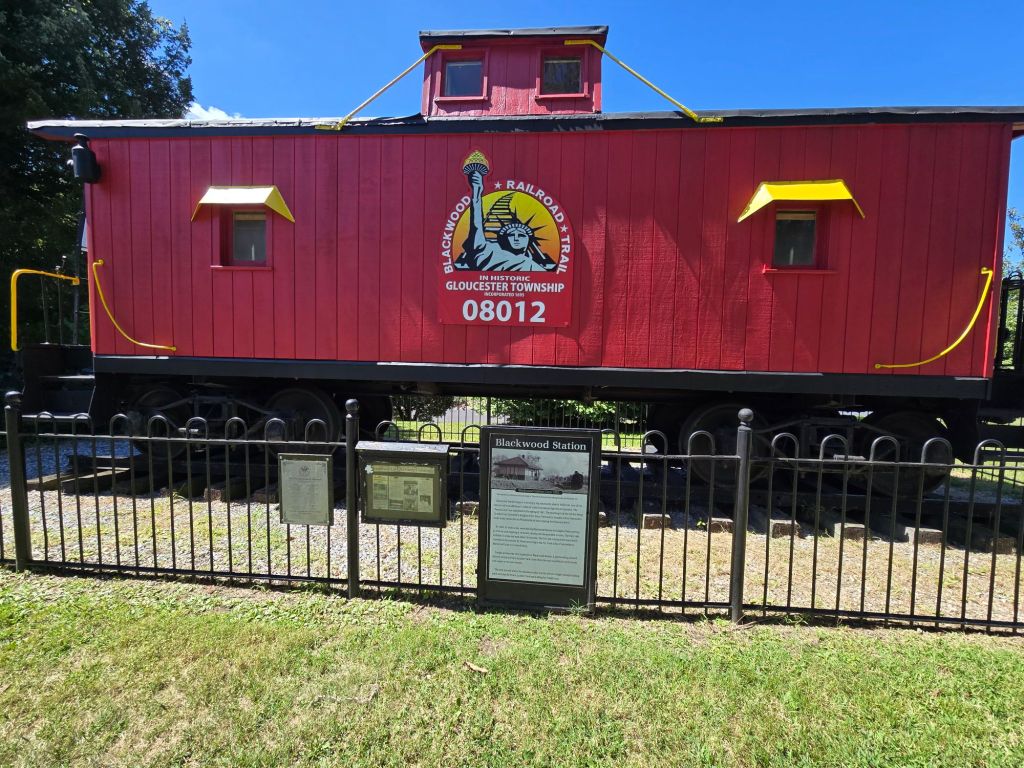
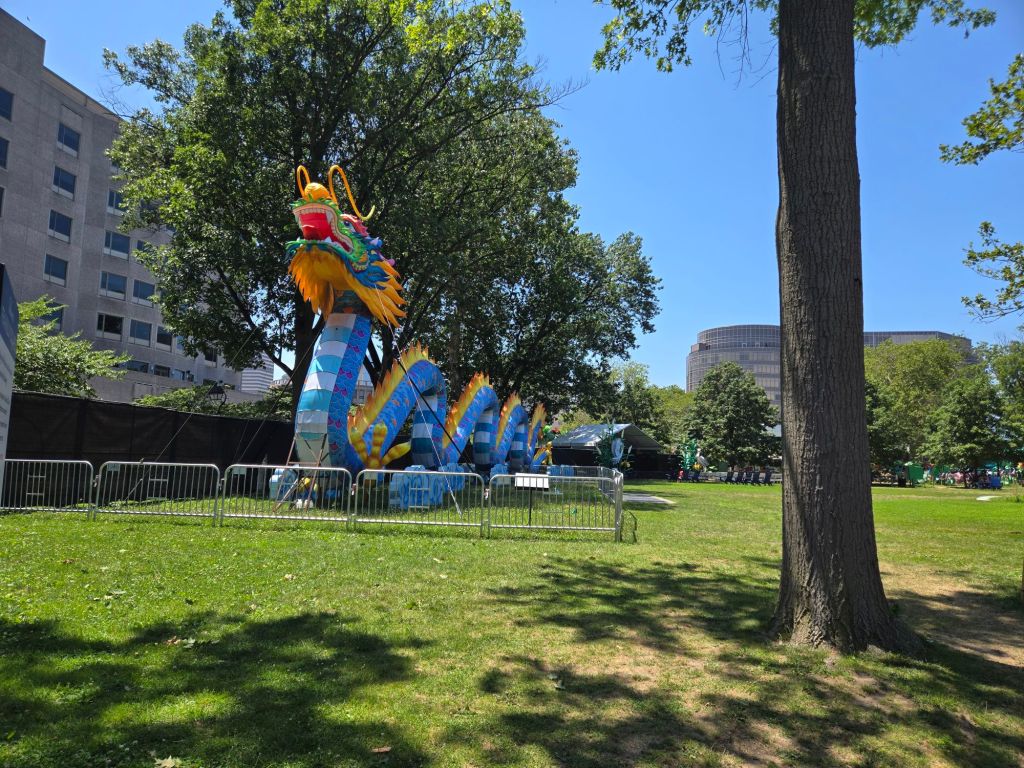
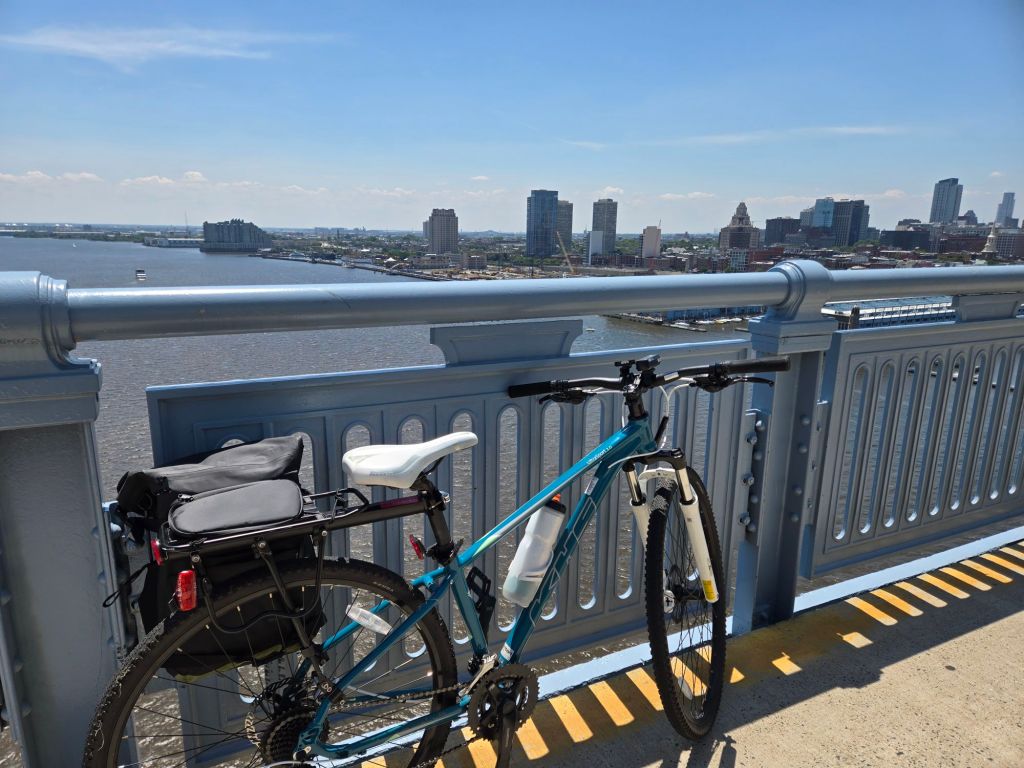
Playful angelsPhiladelphia skylineBust / statue of Frederick Graff. PhiladelphiaFountainCaboose on Gloucester Township trailSculpture in Cherry Hill NJFranklin Square Philadelphia – lantern festivalLantern festival – PhiladelphiaBen Franklin Bridge, Delaware River, Philadelphia skyline, and my bike.
But riding a bicycle for long distances isn’t easy. Hills aren’t easy. Riding into a headwind isn’t easy. But it can start to feel easy-er. Still, that hill you’ve ridden over 100 times isn’t less difficult than it was the very first time. It takes exactly the same amount of energy as it did the first time; assuming you haven’t lost weight or got a lighter bicycle. Without such a change, that hill is just as high and pedaling the same weight over it takes the same amount of energy – it’s the same amount of work. What does change is our ability to perform that work comfortably. It feels easier because we have become stronger and more adept.
And that’s the life lesson, it seems; the more we get out and do the things that are difficult for us, the more capacity we build to do those difficult things.
I recall one day pedaling to work when a lady pulled up in the lane to my right. She commented on the strength of my legs and how easily I had just climbed a hill. I wanted to tell her that the hill was definitely not easy, but the light changed, and we went different ways. And that was when it struck me that I was making it up that hill faster than I used to. And perhaps after 1,000+ miles, i’m no longer a beginner, but hills are still a challenge. I’m just in a better shape to be able to tackle them. And it’s really no different for other difficult things in life. It’s all about growth. Growing in strength, growing in faith, growing in compassion, growing in trust. When we exercise what we have, it becomes easier to put to use.
Everyone feels out of place once in a while; sometimes we feel out of our depth, like we don’t belong among people we hold in high esteem, or simply unsure where we fit in a new employment situation. Perhaps we are a new girlfriend or boyfriend meeting a family; there are lots of situations where we might find ourselves just a bit adrift.
For those of us who were raised in cults (or other sorts of high demand, abusive, or narcissistic environments), finding our way as adults is a fraught endeavor. Where others seem at ease and comfortable, we struggle. Where others seem energized and enjoying conversation, we are guarded and measured and constantly gauging ourselves.
On the other hand, if we find ourselves in a tightly controlled environment with strict rules, like military basic training, a strict martial arts class or other situations that might stress out more “normal” people, we tend to thrive. Give us strict rules, dress codes, a well-understood hierarchy, we’re ready; this is our comfort zone. Ambiguity, on the other hand, leaves us unmoored, untethered, adrift.
If one were to read the literature regarding treatment of survivors of cult and religious trauma, a number of common themes would recur; other than ptsd and depression, many of us deal with dissociative disorders. We often find it difficult to be present, to experience our own lives fully as individuals. Some of us have had incredible difficulty even discerning who we were outside of the group, or outside of other relationships, never having had the freedom to form our own identities as children.
It’s little wonder then that as adults we struggle when trying to find our own place in what seems a tumultuous and confusing world. Too, it can be dangerous as survivors when we find groups that are too welcoming or too friendly; some of us will be overly suspicious and avoid an entirely benevolent group whist others might jump in only to be once again ensnared by someone with devious intent. It seems that survivors are often stuck in one of two modes of interaction; we can be too trusting, or too suspicious. Sometimes we can exist in a strange amalgam of both.
I suppose that my goal has been to find my own way out of this mire. I’ve often wondered what it is within me that is lacking, but the wonder has been window-dressing only. I know what has been lacking. The lack was the ability to trust in somebody who was trustworthy when I was young.
In a functional family, a child learns to trust her parents. She learns that if something is wrong, he parents will do what they can to fix it. In cults and other abusive relationships that trust bond is never created. Survivors don’t properly learn who to trust. We might have been taught to trust people who abused us, we might have had serious medical conditions but were told that we were malingering, or that it was all in our head. We were taught not to trust ourselves, not to trust what our own bodies were feeling, and not to trust our own intuition. We never had the opportunity to bond with a trustworthy individual in whom we could legitimately place our trust, and therefore we developed no legitimate mental image for trustworthiness. What is intuitive for many is theoretical for us. To use an analogy, if one grows up catching baseballs, it’s not overly difficult. But if you approach it from the viewpoint of computing arcs and proper coordinates to intercept the ball, a runner will be around the bases before the short- stop ever gets a ball to first base. If one grows up with a healthy understanding of trust and trustworthiness, this comes easy. But when this is learned later in life, it’s not so organic; there are extra steps.
So what to do?
The first trick is to rewrite the troubled instructions from childhood. We can let the little girl who was not able to trust know that there are trustworthy people in the world and we can help her to learn to trust the right people. We can let her explore the world and learn the difference between trustworthy people and those who are not. This might come about through friendships, with a therapist, or others who are genuinely trustworthy.
Some are now stating an obvious question and pointing to a possible hole in my plan; how are we to find a trustworthy person in the first place? I was fortunate in finding friends who had no agenda for me. I suppose that it’s much easier said than done to suggest someone else find the same, but there are also cult survivor support groups and experienced therapists who will put your needs first.
Once that little girl is able to begin to develop an intuitive understanding of trustworthiness, things will begin to change. In my life I’ve noticed a shift in thinking when I met people; it used to be that I’d be intensely concerned about angering people – i’d be looking for clues regarding appropriate behavior or conversation topics. Being myself was something alien to me.
I recall one conversation where a dear friend introduced me to someone she knew and this man spent more than a few minutes talking to me, interested in what I was doing. I was terrified; not of this man, but of making my friend look bad because she might be associated with someone like me. When I addressed my concern with this friend she was upset, but not for any reason I could have expected at the time. Where I saw myself as a nobody and the man that she introduced me to as a successful radio executive (or something of the sort), my friend saw two people that she cared for, neither of whom are nobodys.
My job has been to break the childhood programming of being a nobody, a little girl, damned and unworthy of protection, and understanding that that little girl wasn’t a nobody. That little girl was somebody worthy of love and protection, and so is the woman she became. And understanding that I am worthy of love and protection vines me permission to trust and to judge the trustworthiness of those who come into my life.
I can now act with agency. I can meet people and be myself because I can say what “I want” instead of what some church told me that I was supposed to want. I can be who I want to be. I can love the things and the people I choose to love. I can have real conversations about real aspirations rather than fabricated ones; about accomplishment that I’m truly proud of, about people I love and have loved.
First leaving a cult leaves one dazed and confused for a long time. That confusion will periodically return because we don’t live in the same world that we grew up in; the cult reality and actual reality aren’t the same thing at all. But got those of us who have dealt with the trauma, through therapy, support groups, exit counseling, after a few moments of reorientation, we can for once be truly ourselves.
My adopted family got together this week in a small town in Pennsylvania to celebrate a marriage that took place some time ago. My understanding of family has been evolving greatly over the past few years, and I feel compelled to share what it means to me.
My birth parents never divorced; I want put up for adoption; I wasn’t orphaned. I wasn’t from what would be considered a broken home. But there was something very broken within the family situation that left me scarred.
When I met my best friend, just over ten years ago I found someone who was a mirror to me. She validated much of my life story. She helped me to become self-aware. But in the process of finding myself and becoming an individual, my birth family became more distant.
I found that I was a branch on my family tree that was no longer being nourished, but I was also part of a tree that refused to accept the love and nourishment that I had to offer.
A branch that is no longer nourished will not survive.
And this is where my friend’s family stepped in. When they were in need, they permitted me to be a part of that family and fill the needs that I could fill.
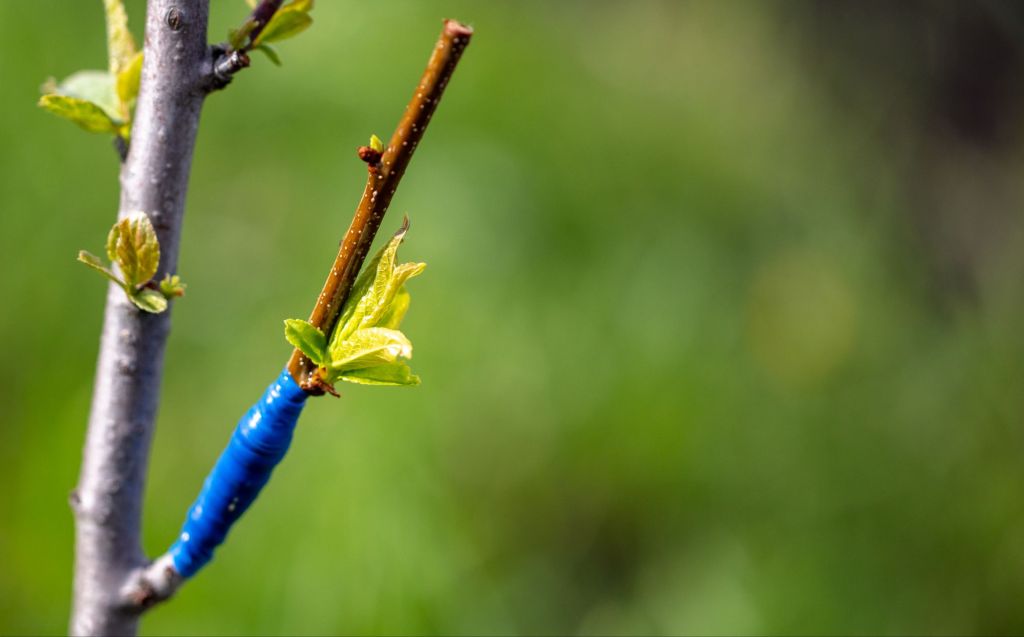
A grafted branch on a tree is a unique relationship. It receives nourishment from the roots, but it also contributes to the health of the tree via photosynthesis. It’s genetics is different from the rest of the organism, but once grafted it has become somewhat interdependent – it is a relationship in which all benefit, and if severed, all will suffer.
Where my birth family severed a relationship, this family took that wounded branch that is me, found a place in the midst of their own struggles and pain, and permitted me to be grafted into this beautiful tree.
This is what love is. This is what love does.
I still marvel. I recall a visit to my birth parent’s house some years ago with my best friend, before I could fully comprehend that I was no longer really welcome, and I still recall the uncomfortable feeling of distance. And in my mind as I sit writing this I contrast that feeling to my experiences over this past week and I cannot help but note the difference. While with my new family, I was at ease and comfortable. There were no suspicious glances, no lack of trust. I was at home.
I have sisters and family who genuinely care about me. (To be absolutely fair, I do have a birth brother who I have a close relationship with, but even he and I have never been able to achieve the level of closeness that I have with my adopted family; perhaps there is still too much unprocessed trauma there – it’s difficult to say. But there is love. )
The point of all of this though is that I see I am part of something more now. Where once I felt as if I were an interloper I see now that wasn’t the case at all; I was a scion, a small branch removed from where it has been struggling, and carefully grafted into a place where I could not only thrive individually, but be there for those who love and accept me.
Grafting is a process that involves wounds, but when done correctly both the scion and the tree benefit. I think this is the case with the family I’ve been grafted into.
To my grafted family, thank you for loving me. Thank you for giving me a place to grow. Thank you for giving me a place to heal.
As someone very dear to my lay this morning in hospice care suffering from what may be her final stroke, I found myself wondering why it is that loving someone has to hurt so deeply. Amidst the self-pity and the feeling that I didn’t have sufficient time, trying to find some comfort in John’s words where he reminds us that God is love, but left adrift and unsteady in trying to make sense of grief and loss I simply asked God why, and waited.
The first answer I received was profound, if not comforting. It was that the best of love is when we can give to someone who can’t give us exactly what we’re looking for. Sometimes what that person gives us in return for our love is more than we want, even if it’s not what we think we need.
The second answer I received regarding love was this – love hurts so much because when we truly love someone, they become a part of us, and we, them. When they hurt, we hurt; when they rejoice, we rejoice; and when they leave, a portion of us does as well. When we choose to love, we offer to that person we have chosen to love, a precious part of ourselves – we give them something of who we are. Some part of us now lives in them.
This sounds like a dangerous and costly exchange, but the economics of the exchange aren’t what we think. For those who choose to love, love is not a limited resource. If, as John said, God really is love, then love is limitless, and the more of it we use, the more of it we will have.
Of course, Love is still costly; when we lose someone we love deeply, that loss will hurt us deeply. And we can know that there will be more love, and more loss. But we can also know that the same love we have for others, God has for us. And we can remember that as we weep, Jesus also wept.
We may be broken-hearted at times, but we are never alone.
I apologize for having been away for a time. As you, my readers, can imagine, writing a very personal blog requires something of a person that mere commentary does not. At the same time, recovery from cult trauma is neither linear nor predictable; one day things can seem fine, and the next you’re that little girl again, hiding, afraid, because if anybody sees you there will be another beating, more repercussions from the church.
That all being said, there is news. I will be back in my writing saddle, and I’m working on a cult education project for which more details shall be forthcoming. There may also be a video series in the future – again, more about that as it develops.
But my spirituality has been on its own journey, with insights about trust and my own relationship with God, who I am, who I’ve been, and so much more. I’ve come to understand how much was stolen from me by the church – the cult of my youth, and I stull struggle with self-acceptance and trust because of this. These are questions that will be more of the focus of upcoming posts, along with the requisite poetry, and possibly even videos. So, please stay tuned!
In Quaker meeting, sitting in silence, we wait to hear messages. For me, this messages sometimes come as poems.
For too long I wandered in despair And walked bleeding pride, nose in air Wounds from past, shields against the divine Instead of drinking the holy wine Evading God’s love
Pain I knew, and purposeful path I chose Hiding with fig leaves wounds God alone could close Then God moved my heart and called me to a land Where he could reach my heart with His gentle hand And fill an empty vessel with the wine of His love
This broken vessel imperfectly mended With cracks retained where God intended And wine drops out after it’s poured in As God gifts me with His love again Cracks let love fall like feathers from a dove.
I was recently encouraged to start a YouTube channel and to discuss Dissociative Identity Disorder on that channel; not because I’m an expert in psychology, but because I happen to deal with this condition. I might do it – I’ll have to see what I can do for a camera and lighting and such, and see if my old laptop is up to the task, but it’s a possibility.
Before I do that though, I thought I’d briefly discuss it here, and that’s the point of today’s post.
Most of you have heard of Dissociative Identity Disorder – if not under this name, then under it’s older moniker, Multiple Personality Disorder. I was first diagnosed with this condition over 20 years ago. This is a condition which many therapists are hesitant to offer as a diagnosis, in part because there is quite a bit of stigma surrounding it, and in part because it engenders a bit of controversy with some schools of thought suggesting that the phenomenon isn’t real. There is another camp that admits it’s real, but suggests that it’s over diagnosed. I can put the second objection to bed, at least for myselfMN b z, because my own case is a textbook example of the DSM criteria.
So, what is Dissociative Identity Disorder? According to Wikipedia, dissociative identity disorder is characterized by the presence of at least two distinct and relatively enduring personality states. The disorder is accompanied by memory gaps more severe than could be explained by ordinary forgetfulness. The personality states alternately show in a person’s behavior; however, presentations of the disorder vary.
Dissociative Identity Disorder results from trauma experiences in childhood, and that trauma must have occurred before a child’s personality was able to completely integrate; you can’t develop dissociative identity disorder later in life.
In dissociative identity disorder, different personality states will be present and in control of the body at different times. Because of this, not all parts will be aware of all that the body is doing, which can lead to a great deal of confusion. Sometimes an individual with DID can be accused of lying, of doing things that they legitimately have no recollection of doing, because the personality state answering about the action may not be privy to the knowledge of the personality state that performed the action in question. This also implies another of the diagnostic criteria for dissociative identity disorder, namely, amnesia. Those of us who deal with DID will have periods of lost time.
It is a fair question to ask about what can cause this condition, but please don’t ever press an individual to go into specific details about their specific trauma. Suffice it to say that the trauma was of such an impact nature that it resulted in the mind’s prevention of the unification of a singular personality in order to defend itself against unspeakable trauma. There are come common themes though among survivors, some sorts of trauma that seem prevalent. These include religious trauma such as cult abuse, medical trauma, sexual and physical abuse, and other types of long term abuse in which there is no chance of escape.
Dissociative identity disorder will present differently in different individuals. One problem that I ran into at one point was comparing myself to others and thinking that because I was different, that I mustn’t have DID. That’s just not the case; we’re all different people, with each our own unique set of circumstances, and it’s not very likely that we’re all going to turn out alike. Having a diagnosis of DID doesn’t mean that we’re all going to have the same level of communication and cooperation among our parts. It doesn’t mean we’re all going to be able to have alters show up at will. (Alters refers to alternate personalities.) What it does mean is that we’ve each likely experienced some sort of overwhelmingly traumatic event during the early years of our lives, and finding a lack of sufficient support outside of ourselves to handle what was happening, our brains found this unique and creative way to deal with an otherwise intolerable situation.
This is the briefest introduction to DID, and if folks want to know more, let me know – I’m happy to write more about it, and I’m happy to consider doing some videos. Let me know.








 Morning Musings