My adopted family got together this week in a small town in Pennsylvania to celebrate a marriage that took place some time ago. My understanding of family has been evolving greatly over the past few years, and I feel compelled to share what it means to me.
My birth parents never divorced; I want put up for adoption; I wasn’t orphaned. I wasn’t from what would be considered a broken home. But there was something very broken within the family situation that left me scarred.
When I met my best friend, just over ten years ago I found someone who was a mirror to me. She validated much of my life story. She helped me to become self-aware. But in the process of finding myself and becoming an individual, my birth family became more distant.
I found that I was a branch on my family tree that was no longer being nourished, but I was also part of a tree that refused to accept the love and nourishment that I had to offer.
A branch that is no longer nourished will not survive.
And this is where my friend’s family stepped in. When they were in need, they permitted me to be a part of that family and fill the needs that I could fill.
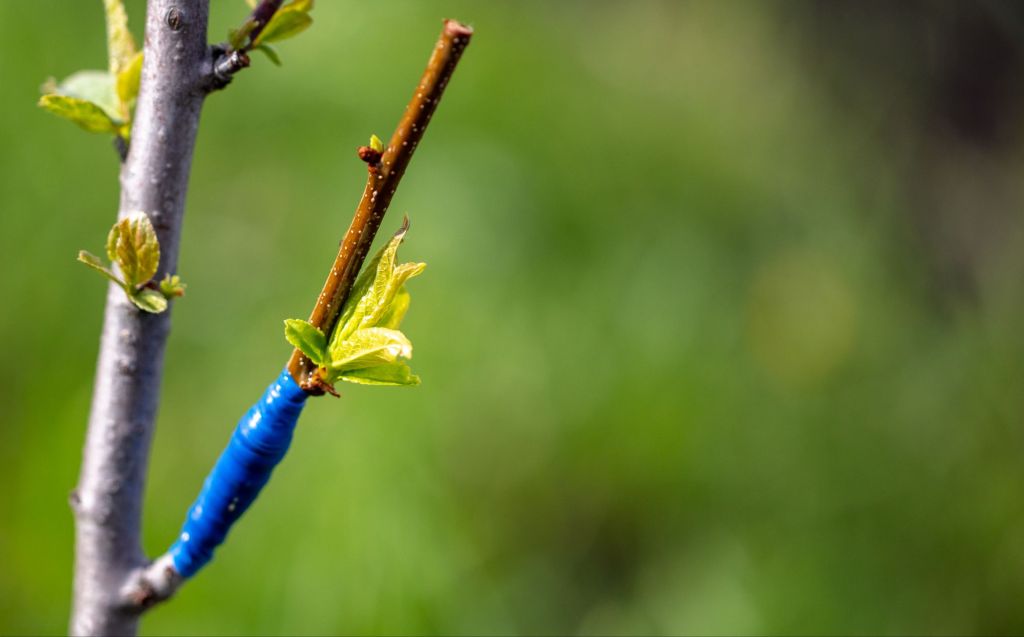
A grafted branch on a tree is a unique relationship. It receives nourishment from the roots, but it also contributes to the health of the tree via photosynthesis. It’s genetics is different from the rest of the organism, but once grafted it has become somewhat interdependent – it is a relationship in which all benefit, and if severed, all will suffer.
Where my birth family severed a relationship, this family took that wounded branch that is me, found a place in the midst of their own struggles and pain, and permitted me to be grafted into this beautiful tree.
This is what love is. This is what love does.
I still marvel. I recall a visit to my birth parent’s house some years ago with my best friend, before I could fully comprehend that I was no longer really welcome, and I still recall the uncomfortable feeling of distance. And in my mind as I sit writing this I contrast that feeling to my experiences over this past week and I cannot help but note the difference. While with my new family, I was at ease and comfortable. There were no suspicious glances, no lack of trust. I was at home.
I have sisters and family who genuinely care about me. (To be absolutely fair, I do have a birth brother who I have a close relationship with, but even he and I have never been able to achieve the level of closeness that I have with my adopted family; perhaps there is still too much unprocessed trauma there – it’s difficult to say. But there is love. )
The point of all of this though is that I see I am part of something more now. Where once I felt as if I were an interloper I see now that wasn’t the case at all; I was a scion, a small branch removed from where it has been struggling, and carefully grafted into a place where I could not only thrive individually, but be there for those who love and accept me.
Grafting is a process that involves wounds, but when done correctly both the scion and the tree benefit. I think this is the case with the family I’ve been grafted into.
To my grafted family, thank you for loving me. Thank you for giving me a place to grow. Thank you for giving me a place to heal.
When Jesus uttered these words he likely shocked his followers – certainly the proper order was for children to emulate adults, and not the other way around. Adults were the teachers, children were to learn, and to upset that order shouldn’t be done.
Just like a Child
In his book Spotting the Sacred, Bruce Main speaks of being childlike, but he points out one quality that has always meant a great deal to me in chapter 5 when he speaks of “unrehearsed congruence”. In the section where this term is used he is referencing the spontaneous prayer of a child and its effect on a man who heard that prayer.
I have in my own life often wished that I could find that spontaneity. Growing up, spontaneity and improvisation were things I could ill afford lest I show too much of myself. Being myself instead of who I was permitted to be resulted in harsh punishment. I learned to be aware and in control of what I said, how I moved, who I was with, simply so I could avoid beatings or other punishments. What I lost was spontaneity and authenticity. I managed to hold on to my curiosity, but it needed to be restrained to areas that were”acceptable”.
I also avoided children; not because I didn’t like children, but because I was told that people like me – people who struggled to simply be who they were told to be, would grow up to be the sort of people who would abuse children. Even around my own daughters, finding spontaneity was not possible. The fact that the individual who told me this was a serial abuser should have meant something. But in avoiding children, I lost something that has taken me many years to rediscover.
At the same time, being raised in a controlling and abusive environment, and finding recovery afterward has taught me something important; resiliency isn’t something that need be lost forever.
I found that one enemy of resiliency is resignation, while the path to resiliency, and to the Kingdom, as Jesus put it, is to “become like a child”. In my own case, that path involved the most child-like act of finding a friend; of being open to a relationship, of trusting.
For survivors of trauma, trust can be a dangerous word. For many of us, often as children, our trust was, in many cases, betrayed. We are not given as adults to trust easily; it is something we must re-learn. We must “become as children”, not entirely, but at least in part.
I have also found that in “becoming like a child”, at least in learning to trust, I have also learned to feel more deeply. I can feel joy, sorrow, and especially love much more deeply and viscerally than I could before. When I had put aside not childish, but childlike things, I had also walled myself off from being hurt. After all, big girls aren’t supposed to cry over little things, or things that are long past; at least not if we’re “emotionally stable”. But being childlike is a recognition that the “rules” of adulthood, especially our Western, puritanical, capitalist, ‘drag yourself up and get on with it’ attitudes, are mostly bullshit, and terribly harmful to the human condition. Rather than helping us heal and move on, these attitudes leave us with emotionally disfiguring scars and festering wounds as we seek to navigate life pretending that all is well and that we need no help or compassion.
In ‘becoming like a child’, we’re able to reach out when we need help and when we see another in need. We discover, at once, compassion and resiliency because they are both sides of the same coin.
Real healing looks different. Those who heal still carry reminders of past trauma, but it doesn’t leave them broken and disfigured with wide-open wounds. Instead, the stories of past trauma are woven into a rich and colorful tapestry that radiates strength and hope and which is a celebration of life. This isn’t to say that one must experience trauma in order to fully experience life; rather, I’m saying that those who have found a path to healing learn to integrate their previous experiences, even the traumatic ones, into the fabric of their being in such a way as to make that resulting tapestry more beautiful, richer, and stronger that it otherwise would have been.
We need to understand too what real compassion looks like. This is another part of us that has been harmed with our modern, puritanically and capitalistically influenced way of thinking. Too often when we hear of another’s problems we are quick to offer advice or solutions and forget that what many really need, especially early in their struggles, is to simply be heard and understood. When someone is facing, for example, a life altering medical diagnosis, they will certainly hear from many about the benefits of CBD, herbal remedies, and countless people who recommend some specialty treatment. Often though, what someone really needs is someone to simply hear them and to give them the space to come to terms with the change that is taking place in their life. What they need is a compassionate listener. What they need is a friend who will simply be there.
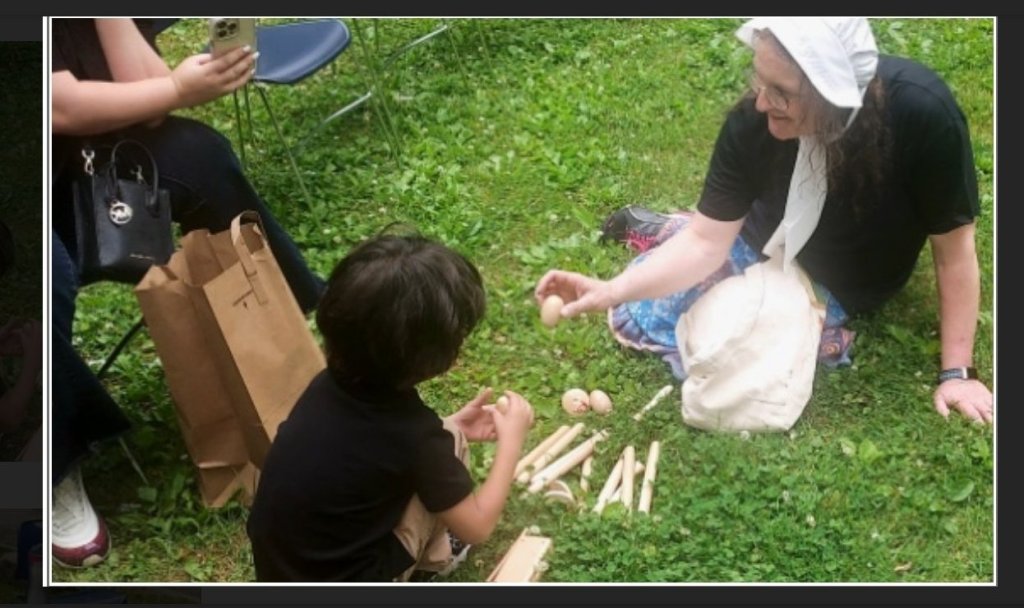
As children, there were many times when our friends could not solve our problems and we could not solve theirs. Often enough, our problems were their problems too. But those problems became easier to bear because those friends were their. When we can regain that childhood trust in each other and make each other’s lives easier, we are discovering part of what it means to “become like a child”.
Recently I was occasioned to take part in an extra-judicial proceeding that dealt with some abuse I experienced as a child. Alone, the experience would have been much more than would have been bearable in a healthy fashion. But I asked my best friend if she would be with me, and she went. What might have been a terribly stressful experience became instead something that was also healing, despite it’s nature, for both of us because the experience was shared. It brought us closer; we learned more about ourselves and about each other.
Perhaps that’s yet another part of both being childlike and resilient – being able to continue to grow and heal, to recognize our weaknesses, to know that there is yet much we can’t do alone. Sometimes we need to be content to wait and find what peace and joy we can in the here and now, despite what seemingly integrate things may otherwise be happening. Earlier in the book of Matthew, Jesus gave his familiar parable of the lilies of the field which neither spin nor sow, yet are dressed in more splendor than Solomon himself. They don’t toil, but God provides for them. Jesus’ point was not that one shouldn’t ever work, but rather that work and effort extended solely for the purpose of vanity was unnecessary. When we look at young children, we don’t see them worried about how they or their friends look; instead, what matters is the quality of the friendships they make, whether they play well together, whether they share, whether they care.
It’s only as we become older that physical beauty begins to take on as much, or in some cases more importance than inner beauty. It seems that we are taught to find distasteful those who do not conform to a particular aesthetic. We can become more like children by worrying less about physical appearance – our own as well as that of others, and more about character – especially our own.
Children are thirsty for knowledge. They are naturally curious about everything. They aren’t satisfied with “just because”, nor should we be. It may seem more grown up to not ask “why”, but perhaps that’s one reason we’re in such a mess right now. Maybe we need to ask “why” more. Why can’t we have something like a National Health Service in the US? Why do we need to rely so heavily on oil and the resulting pollutants? Why can’t we have clean air and water? Why can’t we have equal rights for all? Why must we fear that the rights we do have will be stripped away?
The difference we have was adults is that along with our childlike questioning, we also have adult autonomy. We can change our world, and we can change ourselves. While we may not be able to change our past, we can still correct the deficiencies we may have had in our upbringing. If there were things we didn’t learn, we can still learn them. If we were lacking the love of a family, we can yet find even that – this I can promise you because it happened in my own life.
What I can say about my life is that every truly good thing that happened to me began when I had trust, like that of a child.
I’m sorry for not posting the past few days. I’m in New Hampshire dealing with something that has been particularly difficult emotionally. I was fortunate in that my best friend was with me.
My friend and I are much closer than friends tend to get – we are as close to sisters as two genetically unrelated women can be. What we share is a similar upbringing, and an understanding of each other’s pain, and what growing up in a toxic religious environment can do to somebody – how it can have lifelong consequences. We both suffer from chronic illness including asthma and allergies and autoimmune issues, and we both share a deep love of art and music. We are both divorced with two children; I have two daughters, she has two sons. Her mom worked for two of the same companies that I worked for – one of them in the same building and same floor, albeit quite a few years prior to me. The thing is that we have a great deal in common, and when we talk, we connect on a level that I can’t reach with anybody else, and never have.
Over the years, I’ve been accepted as part of the family, and where my own family rejected me, it is my friend’s family that embraces me. I’m not sure I would have survived the difficulties of the past few years without her. This is the sort of friendship we share, and today’s post was inspired by a conversation we had.
The Sower and the Seed
In the gospels of Matthew, Mark, and Luke, and also in the gospel of Thomas, you will be able to find the parable of the sower, or the parable of the soils as it is called by some. It is a story of a farmer who instead of sowing seeds with care, cast them about indiscriminately, giving no care as to whether they landed on good soil, poor soil, among thorns, or among stones.
Have you ever wondered on hearing that parable what sort of soil or seed you might be? (Depending on how it was explained to you.) Or perhaps it was the parable of the ten bridesmaids, and you wondered whether you might be a wise one who would bring enough oil to last until the bridegroom arrived.
The question in either case comes down to one of sufficiency – do we believe in ourselves enough to say unequivocally that we are the fertile ground or the good seed, or that we are the wise bridesmaids with sufficient oil for our lamps. We can say that we are wise, sufficient, loving, and caring, and we know this because of the company we keep, because of those who choose to love us, and who permit us to share our love with them. To deny ourselves is to deny those who love us. To deny ourselves is to call everyone who places faith in us liars.
So what of this beautiful flower growing from a brick and mortar wall?
My friend, my sister, and I saw this and realized that some seeds care not where they are planted. Such as these are my friend and I, who by all odds probably shouldn’t have made it to where we are. We have both survived much, and fate seems to have had a reason for bringing us together. I know that she brought healing to me, and I’ve seen moments of that in her as well. This flower, growing where nature really didn’t intend for flowers to grow, represents both of us perfectly. Sower? Soil? Who really cares. Life threw us both some really unique curve balls, and we did the unexpected with them. It’s as if a pitcher throws his best and the ball just disappears. Nobody got to hear a familiar report of bat striking ball, nobody saw it land in the catcher’s mitt, nor did it go past him; that ball just disappeared somewhere between the pitchers mound and the catcher. Someone had a plan for that ball. But just maybe, the ball, like my sister and I, like that flower in the wall, had plans of it’s own design. Our respective churches had plans for us, they, too, are gone. But we are here together, living our own lives as best we can, making art, making music, writing, and trying to make this world a little bit better for the people we interact with.
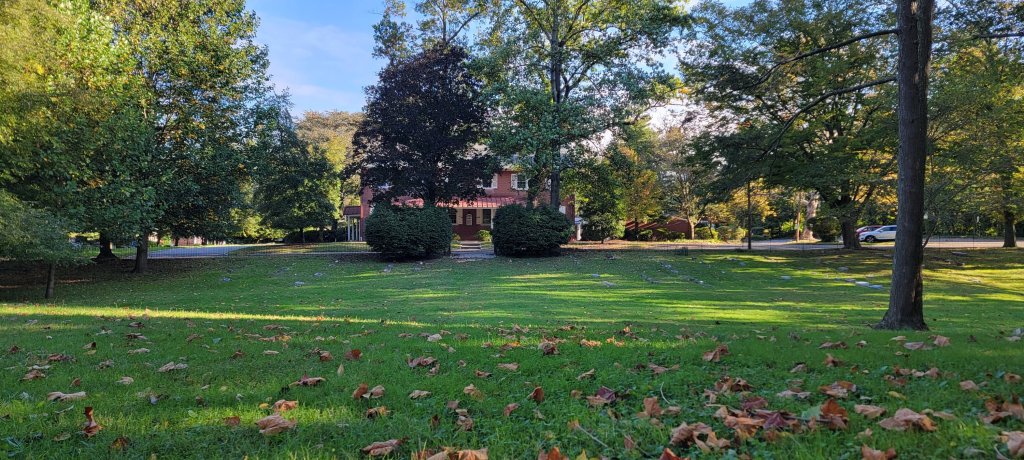
You Belong Haddonfield Friends Meetinghouse from the graveyard
I received this message this morning from someone dear to me: “Dee, you certainly belong in this family. We have all been through many fires and have all been Triumphant.” sometime after I was done crying I began to think about the difference between “belonging in”, and “belonging to”; between chattel and partnership, between “one among” and “one of”.
Growing up, I always felt a if I were trying to be, but never succeeding at being “one of”. Not in my family, not in my church, not at school, not by many in the military in which I was compelled to enlist after high school, not even in my own body. My family and my church were constantly telling me that I wasn’t who I knew myself to be, and I was punished, often harshly, for stepping outside the bounds of what was considered acceptable.
We learn who we are when we are accepted, when we discover a sense of belonging with those who love and accept us as we are. We become better versions of ourselves among those with whom we belong when they challenge us to do better, not because they dislike us, or because we embarrass them, but because they know what we are capable of, and what we deserve from life.
Finding a family where I could belong was the first step in healing my very broken soul. Learning that I was worthy of being loved, that I wasn’t an abomination, that I wasn’t evil, helped me to become a more complete, a more whole person. I learned to be better, to do better, to love better, and to accept love.
The photo accompanying today’s post is my Meetinghouse, the Haddonfield Friends Meetinghouse, taken from our graveyard, where I will someday likely be buried. A few montre ago I was walking in this graveyard and thinking of those Friends now buried there, who were part of my meeting, and felt a deep understanding that these are now my people. I’m a part of this community. This is where I belong, and in our graveyard, children play, people walk, and people have been doing so for 300 years. And these people from the beginning remain where they belong, among Friends, with those who remember them, among children playing, and ever close to where they worshipped in silence.
I’ve been a part of this community for about 2 1/2 years,and though it wasn’t exactly what I was looking for, it was and is exactly what I needed. And the larger Quaker community has been even more so. I’m finding myself challenged spiritually – not only to live my beliefs, but to define them. I belong here, and it is in this community, among these people, where I am becoming again, a better version of myself.
Some say that blood is thicker than water, and this once implied that familial bonds were stronger than the bonds of Christian baptism. What I’ve come to understand of late is that the strongest bond isn’t one of blood, or genetics but of commitment, of covenant, it just so happens that our strongest commitments and covenants are usually aligned with our genetics. Sometimes though, this isn’t the case. Sometimes those bonds are stained or broken. Sometimes they are irrevocably shattered. And when that happens those of us who wish not only to survive, but thrive, will find this who are capable of loving us, of being mirrors for us, and of accepting our love.
The worst thing we can do, and many of us might be tempted, is to consider ourselves unworthy, unlovable, too broken, and give up. If you have been tempted to feel this way, please know that you don’t have to. Every one of us is important and worthy and needed. Your story matters, your voice matters.
If you are feeling so troubled that you might harm yourself, please reach out and talk to someone. 988 is the national suicide hotline in the United States. You can find an international list of hotlines here: https://blog.opencounseling.com/suicide-hotlines/
I allowed myself to feel in some of the darkest places imaginable for far too long, because I believed the lies I was told about me, by those who couldn’t, by those who didn’t know how, and by those who never wanted to love me. I let their lies poison me, and it wasn’t until I stopped listening to them that I was able to find myself, to hear my own voice in the midst of the inner chatter my head had been filled with, and to begin the process of healing and becoming.
If you are like I was many years ago, you may be feeling a bit desperate, like you have few options – or no options. You may be tired, exhausted by the struggle, convinced that nothing will change. I’d like to share some thoughts about that.
The first one is this: things definitely can change; the reason we think they won’t is because despite how much of the picture we might think we can see, we don’t see it all. I had huge gaping holes even in my own autobiographical memory. I knew that most of my family didn’t want to know me because I was intersex, and they wanted me to live as male, and I didn’t want that. They see me as trans, rebellious, going against God’s design, and no amount of genetic information will convince them otherwise. For many years I was hopeless and at times, desperate. I saw no way out. But my picture and knowledge were incomplete. Fate and unmet friends, who soon became adopted family, had other, better, plans for me.
Life can change in marvelous and unexpected ways, and it is when we are feeling empty that we can be filled. The challenge, when we find ourselves in that empty state is to let ourselves be filled. We need to be willing to permit the pressure vessel that is holding that vacuum of emptiness to be punctured and allow it to be filled. While it can be an uncomfortable process, the rewards cannot be overstated. We are social beings, and even though we may have been harmed by people, it will be people who will bring us healing. Belonging, not belonging to, but simply belonging, changes us, heals us, in ways that we cannot expect to ever be changed or healed in solitude.
Solitude feels safe, but it’s really not. It isolates us and acts as an incubator for the negativity that we’ve been filled with. We think we’re protecting ourselves from further hurt, but what we’re really doing is preventing ourselves from achieving the healing that we could be experiencing. This isn’t too easy that we should be jumping into relationships just for the sake of having them, but it does mean that if we want the best in life, we will do well to put forth some energy in cultivating healthy and lasting relationships.
This is the simplest test possible, but the answer may be difficult to accept, proceed with caution.
What is this very simple test? Well, it involves one question only, and that question is: “Was the church or group my family was involved with while I was growing up more important to my parents than I was?”
By this, I don’t mean that your parents believed that your salvation was of primary importance, and that adherence to values expressed by the church was necessary to securing that for you, and that for that reason you may have had to follow some rules you didn’t like. Instead, I mean a situation in which the needs of the church came before your needs. Were you pulled out of school because of church duties? Were vacation or weekend plans dictated or altered because of church needs? Were life choices made for you instead of by you? Did you feel like you wanted to simply wake up one morning in a family that simply loved and accepted you and wanted to hear your dreams for your life instead of hearing what God’s plan for your life already was?
If these things sound all too familiar, if you find yourself struggling with things that “normal” people seem to find easy, maybe it’s time to take a look at your past and consider the childhood you experienced. An interesting question to consider might be too ask what might happen if you were to now leave or disavow that church or group. Would you still be welcome by your family? Would that change your relationship with your family? If your continuous relationship with and access to your family hinges on your belief in, and adherence to values expressed, or membership in a church or group, you’re most likely in a cult.
If you are free to leave without worry of harm to your familial relationships, or friendships, then it’s pretty likely not a cult – cults don’t generally afford that type of freedom.
Still, if you feel there was something off about the religious group you were raised in, not having been raised in a cult doesn’t necessity mean that you didn’t experience religious trauma. In either case, seeing a therapist competent in treating clients who have experienced religious trauma could prove helpful.
I’m slowly building a collection of trusted links on the curated links page of this website. It is a work very much in progress, so feel free to check for updates often.
The other day when I wrote about what it means to be A Quaker, we touched a bit on Authenticity, and why this is especially important to former cult members. I’d like to explore this a bit more today.
As I was thinking about this while walking to the bus this morning, I recalled a time when I was young and someone asked me a really simple question, perhaps what I might hand been doing, or where I was going. I answered with a lie. I don’t recall what the question was, or what the lie was, but I remember asking myself why I had lied. I remember at that point understanding a need to be always in control of the narrative about my life, even if I couldn’t actually be in control of my life. I remember how uncomfortable I felt not being truthful, even though the actual truth was utterly benign in this instance.
A more recent instance speaks to how much evidence I require when people make claims about miracles, or the power of the mind,or similar things. I have writhes outright fraud. I have been there and been a part of services where ministers used manipulative methods to elicit desired responses and emotions from congregants. Now, when I hear claims from preachers, spiritual leaders and gurus, and the like, if it is something I’m able to try myself I am often willing to entertain the idea. However, I need more evidence than simple claims. I need more evidence, for some things than even many claims. If someone claims that they can cure cancer or depression or ptsd with some simple meditation practice, this is something that requires a study. If it actually works, a proper study will demonstrate that it works. How it works, if it does, isn’t important at this stage, we just need to see if there is an effect. If miracles are happening, let’s see them! I’m not going to dismiss the miraculous, just as I’m not going to dismiss psychic phenomena out of hand, but I need to see some sort of evidence, something legitimate and verifiable.
Some will, indeed some have asked “Why can’t you just have faith?” The answer is that I used to. Sometimes I wish I still could. But I’ve had that faith used against me. All former cult members have had their faith used against them; it was weaponized. Some of us manage to come out of the cult experience with that faith intact. For some, as I was for many years, this is what keeps us moving from cult to cult.
Cult leaders are con artists. And a successful cult leader is the most effective con artist you will ever meet. Where most con artists seek to take your money, cult leaders want you, entirely: body, mind, and soul, along with your money and time, and whatever else strikes their ever voracious fancy.
When I was involved in cults I wasn’t myself. Not as a child, not as a teenager, not when I was in the Air Force, not when I got married, not when I got divorced, and really, not until a dear friend who has become a sister in every way except genetics, explained what cults are. Her sister helped me connect to the International Cultic Studies Association, through whom I was able to find a competent therapist who understands cult influence.
Cults demand allegiance, and members must represent to the world an image, both individually and corporately, that all is well, all the time, and that they are content, secure, and happy. Life in a cult is constant theater and perpetual performance.
Everyone in a cult has a role, and everyone has lines. The problem is that nobody has a script and the leader is making everything up, plot and parts, on the fly. And despite the lack of script, the consequences for the actress who misses a que, flubs a line, or, worst of all, goes off-script, can range from uncomfortable to dire.
As actors, recovered ex-cult members have a finely-tuned sense of performance. If someone is being inauthentic around us, we will soon recognize it. We might not know what they are up to, but we will know something is going on; we’ve seen this play out before.
Authenticity matters because it is the foundation of every relationship; business, personal, social, or romantic. We trust that people are who they claim to be, and we interact with them based on that understanding. This is how con artists so effectively exploit people; they use trickery and fabricate a false persona to gain the trust of their ‘mark’, of someone they intend to fleece. It is no different with cults.
My early years were spent in Bible-based cults, and within each of these was a code of conduct, or rather two codes of conduct – an internal and an external code of conduct. Some things that might have been tolerated in private may be forbidden in public. But there were some universals.
The first universal was that everything was fine. No matter what, I was fine, I was happy, I was a faithful Christian. I wasn’t hungry, I want being beaten, I wasn’t being sexually abused, I was always getting appropriate medical care. Any problems I had in school, poor grades in some classes, or constant bullying, these were entirely my fault.
One of the largest problems for me was that I was “assigned” male at birth. While I knew that I wasn’t male, any mention of, or any behavior contrary to that position was promptly punished. And while I could learn my lines and play my role, while my parents could cut my hair and sign me up for baseball teams, they couldn’t make me taller, or more athletic; they couldn’t alter my genetics.
At puberty, things didn’t happen for me as they did for my brothers. While some changes occurred, others didn’t. My voice never really changed, I never developed an Adam’s apple, and I remained shorter than my next younger brother (the others would soon overtake me) . What I didn’t know then was that genetic testing decades later would reveal an intersex condition, but with family and church, that wouldn’t have mattered; what a doctor said at the time of my birth held the same weight as scripture.
I wish that I could tell you how many sermons I sat through where a preacher told the congregation that “feelings will follow action”. Being unhappy, depressed, hurt, angry, except of course for righteous reasons, and at the right times, was against the rules. There was an attitude of “fake it until you make it, but then if you never make it, keep on faking it.” For me, for all LGBTQIA people, this meant acting heteronormatively in accordance with who we were told to be. It was, and remains in some churches, and in most cults, imposed inauthenticity.
Another example of inauthenticity that might surprise people will be groups like the Mormons. Think of any Mormon you have ever seen and ask if you have seen them unhappy. I’m willing to bet you haven’t seen a sad, angry, or miserable Mormon who wasn’t a child in public. You won’t see missionaries seeming to have bad days. Mitt Romney always wears a smile. It’s the approved look. It’s the cult personality. And every Jehovah’s Witness knocking at your door, or handing out Watchtower magazines on street corners or train stations will be smiling, whether or not they really feel like smiling. Their authentic feelings in the moment aren’t supposed to matter. What matters is what Jehovah, the Heavenly Father, God, Jesus wants, as expressed via a prophet of governing body, or someone speaking with divine authority. And when God’s messenger tells us that we are supposed to be happy, whether we are happy or not, we will put on that happy face and begin faking it, hoping that we will make it.
The problem with this, of course, is that we get a false picture of who and what these people and their faith are about. We don’t have an opportunity to witness how the struggling faithful are supported by their community, because in a cult, the faithful cannot be seen as struggling.
This imposed inauthenticity wears one down. When recruiting, when at services, classes, or group activities, this near constant mandate to be who one is not eventually leads to a place, for those who join cults later in life, of forgetting who one was before they joined. For those of us who were born or raised in such groups, our personalities never developed in a natural and authentic fashion to begin with. As people begin to become disillusioned with cult life, a kind of cognitive dissonance begins to register. We begin to understand that who we portray ourselves to be to the world is somehow not who we know ourselves to be – even if we are not yet able to accurately define what we mean by “self”.
What matters in helping people to find their way out is two things: the first is relationships. In my own case, and in pretty much every other case I know of, there was someone concerned, or the person in the group was concerned about someone else. But that concern isn’t sufficient to break the spell; breaking the spell requires seeing the group and the leader(s) for who and what they are. We may not, and likely will not have the totality of that knowledge, but we can have enough to see them for the frauds they are, and the fraud they perpetrated on us and those we love.
We recognized that we were peddling something as authentic, but what we were selling was anything but. What we were living was anything but. And when we were fully awake to that lie, and the truth had become valuable to us, we could no longer remain. For some of us, authenticity means the loss of family, friends, and community. For some it means starting life in the modern world completely unprepared, with little formal education, no money, and few people on the outside to turn to.
I used to think that I was perepared for life. I wasn’t. Had I been, I wouldn’t have traipsed from cult to cult for 60 years. Had I been, I wouldn’t have ignored serious medical conditions for decades. Had I been, I might have understood, or at least begun to recognize, the extent traumatic abuse I had experienced in my childhood.
What changed for me was seeing others, now my new family, who learned how to be authentic. These people embraced me, loved me, and let me love them, authentically. There is no greater power than this.

 Morning Musings