I’m a Quaker, and most of the time, I ride my bicycle to meeting. Today, when I got up, it was raining, and while I could have taken a bus or found some other means to get there, I rode my bike.
Riding usually helps me clear my mind. Even when politicians are bent on harming or eliminating swathes of our population, even with economic uncertainty, riding can often help me to clear my mind.
Today, my mind has been troubled. As a Quaker, I believe that there is that of God in each of us – some spark of human divinity or divine humanity that is able to enlighten every single person on Earth. But I am also intersex, and because I’m not living in the gender that I was assigned at birth, I’m also trans. And living under a regime that considers me a terrorist simply for that, I have difficulty seeing that divine humanity in some people.
Still, I’m a Quaker. It’s not up to me to ignore that spark of the divine in those who would wish harm upon me. Instead, I need to recognize the wounds that render such people incapable of finding that of God within themselves.
The human part of me can lead to dark places. I can be led down a road of anger, resentment, or even self-harm. But there is that spark that lives in me that will, when I listen to it, when I give it the fuel it deserves, when I provide it kindling and let it burn within me, show me another way.
In the rain, I can take what many see as unpleasant, and i can let it wash and cleanse me. I can ride and clear my mind.
A friend once wrote of the rain, saying, “Me, I’m not alone. I have the rain. I have my soul set free. ” And I suppose that’s a lesson for me. Rain can upset some people. It can stop some of us in our tracks. But, at least for today, it washed me; it was my friend.
And that, sometimes, is where riding in the rain leads me.
I’m sorry for being away for a while – we sometimes become busy, take on other interests – life changes. And perhaps that’s what I’ll talk about, in a way, today.
I’ve been riding my bike this summer, a lot. In the past few months, I’ve ridden more than 1,000 miles. It’s how I commute to work, to Quaker meeting, and it’s how I’ve been exploring the local area. I’ve seen some lovely things.
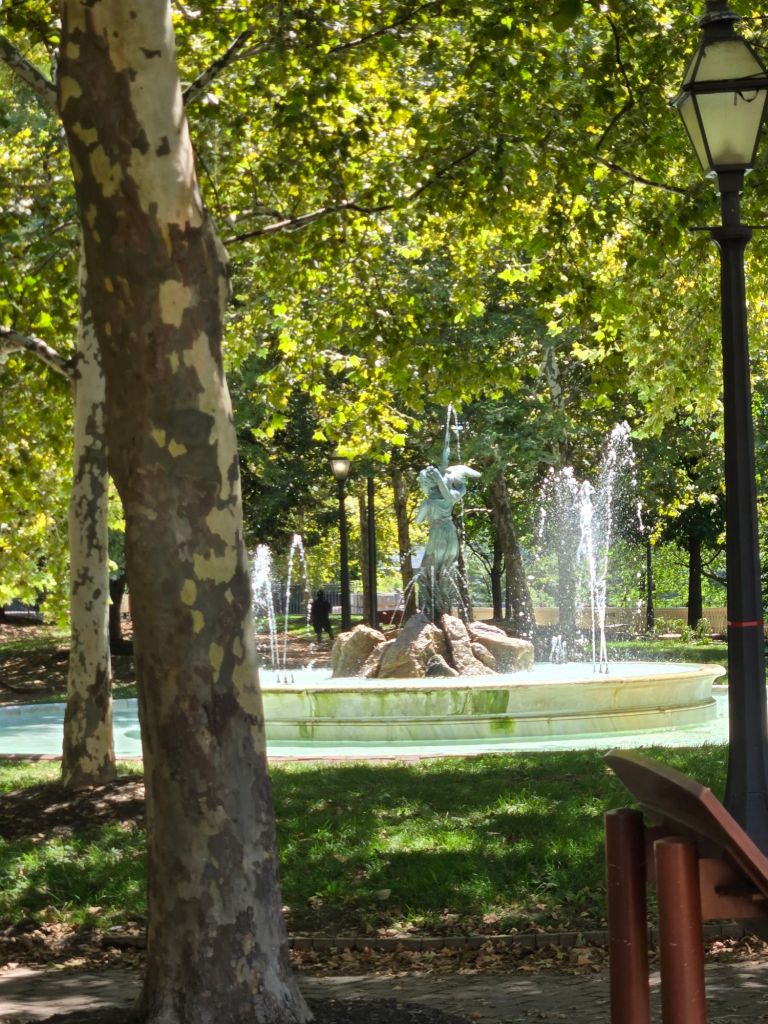
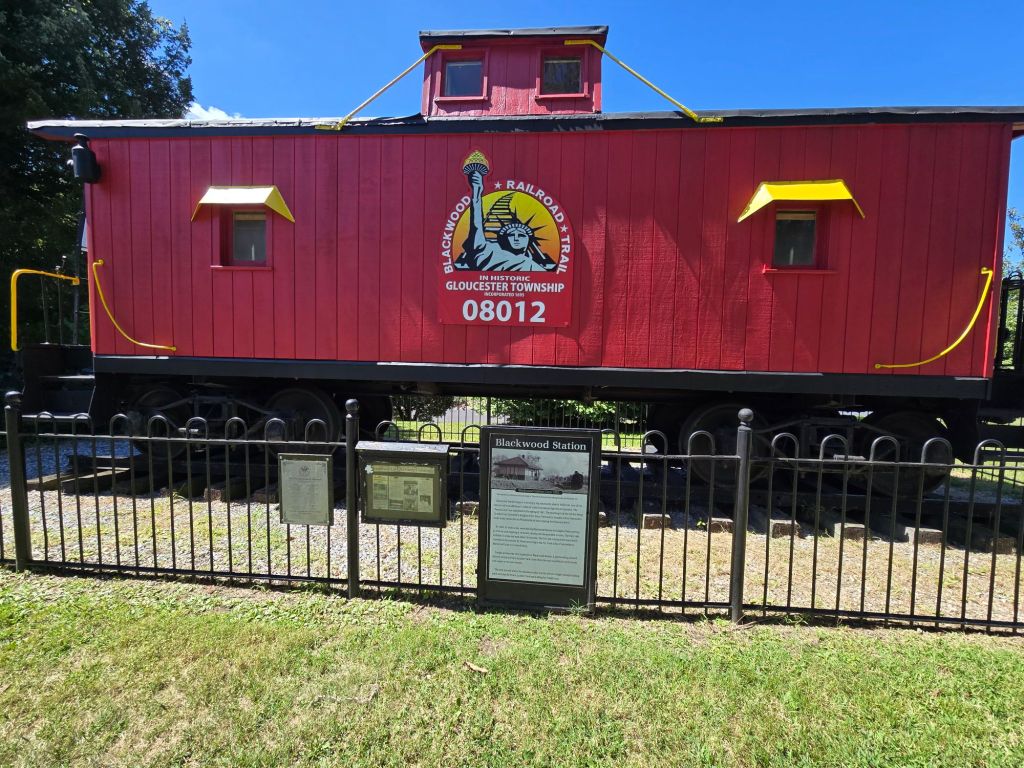
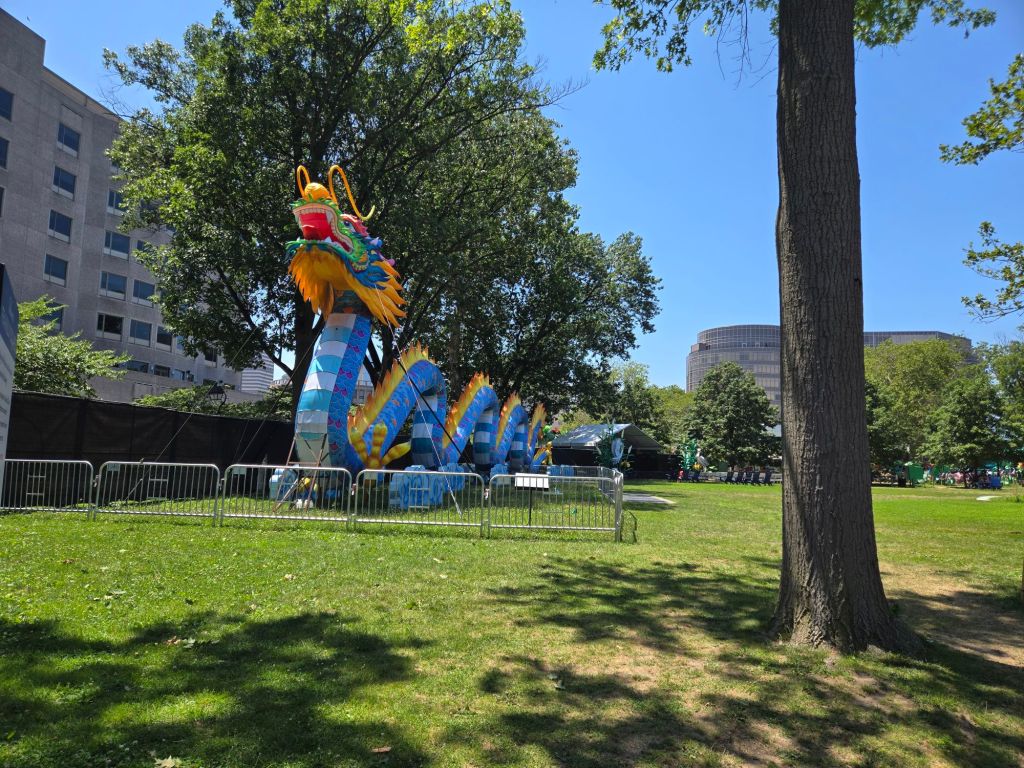
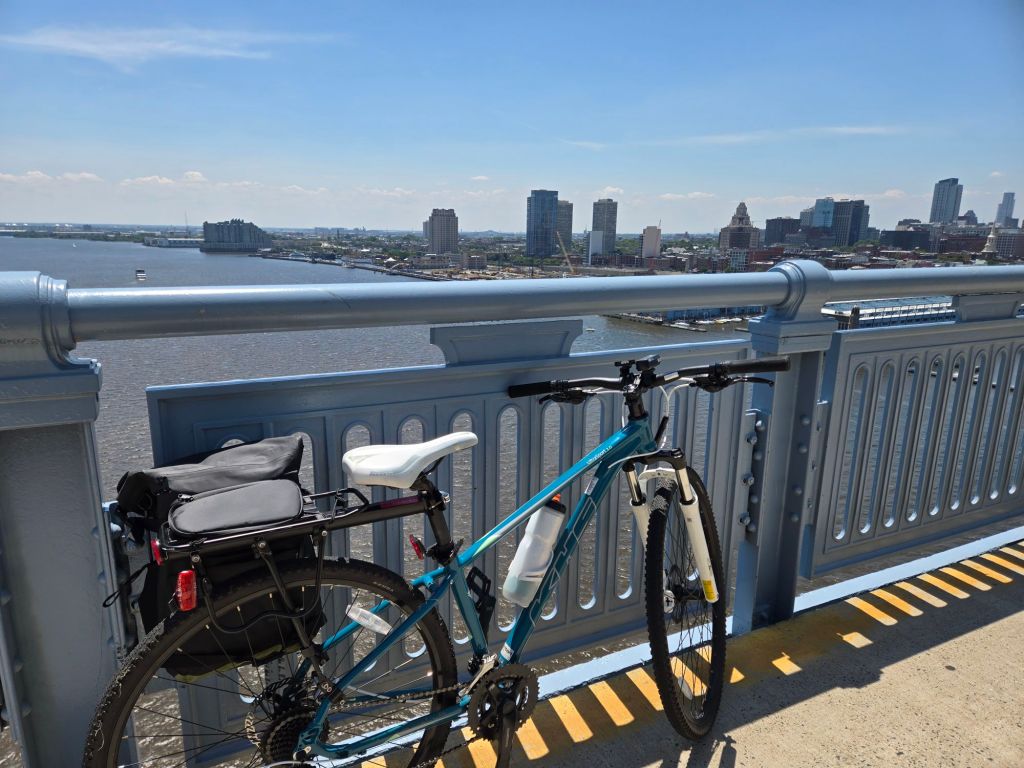
Playful angelsPhiladelphia skylineBust / statue of Frederick Graff. PhiladelphiaFountainCaboose on Gloucester Township trailSculpture in Cherry Hill NJFranklin Square Philadelphia – lantern festivalLantern festival – PhiladelphiaBen Franklin Bridge, Delaware River, Philadelphia skyline, and my bike.
But riding a bicycle for long distances isn’t easy. Hills aren’t easy. Riding into a headwind isn’t easy. But it can start to feel easy-er. Still, that hill you’ve ridden over 100 times isn’t less difficult than it was the very first time. It takes exactly the same amount of energy as it did the first time; assuming you haven’t lost weight or got a lighter bicycle. Without such a change, that hill is just as high and pedaling the same weight over it takes the same amount of energy – it’s the same amount of work. What does change is our ability to perform that work comfortably. It feels easier because we have become stronger and more adept.
And that’s the life lesson, it seems; the more we get out and do the things that are difficult for us, the more capacity we build to do those difficult things.
I recall one day pedaling to work when a lady pulled up in the lane to my right. She commented on the strength of my legs and how easily I had just climbed a hill. I wanted to tell her that the hill was definitely not easy, but the light changed, and we went different ways. And that was when it struck me that I was making it up that hill faster than I used to. And perhaps after 1,000+ miles, i’m no longer a beginner, but hills are still a challenge. I’m just in a better shape to be able to tackle them. And it’s really no different for other difficult things in life. It’s all about growth. Growing in strength, growing in faith, growing in compassion, growing in trust. When we exercise what we have, it becomes easier to put to use.
In Quaker meeting, sitting in silence, we wait to hear messages. For me, this messages sometimes come as poems.
For too long I wandered in despair And walked bleeding pride, nose in air Wounds from past, shields against the divine Instead of drinking the holy wine Evading God’s love
Pain I knew, and purposeful path I chose Hiding with fig leaves wounds God alone could close Then God moved my heart and called me to a land Where he could reach my heart with His gentle hand And fill an empty vessel with the wine of His love
This broken vessel imperfectly mended With cracks retained where God intended And wine drops out after it’s poured in As God gifts me with His love again Cracks let love fall like feathers from a dove.
When Jesus uttered these words he likely shocked his followers – certainly the proper order was for children to emulate adults, and not the other way around. Adults were the teachers, children were to learn, and to upset that order shouldn’t be done.
Just like a Child
In his book Spotting the Sacred, Bruce Main speaks of being childlike, but he points out one quality that has always meant a great deal to me in chapter 5 when he speaks of “unrehearsed congruence”. In the section where this term is used he is referencing the spontaneous prayer of a child and its effect on a man who heard that prayer.
I have in my own life often wished that I could find that spontaneity. Growing up, spontaneity and improvisation were things I could ill afford lest I show too much of myself. Being myself instead of who I was permitted to be resulted in harsh punishment. I learned to be aware and in control of what I said, how I moved, who I was with, simply so I could avoid beatings or other punishments. What I lost was spontaneity and authenticity. I managed to hold on to my curiosity, but it needed to be restrained to areas that were”acceptable”.
I also avoided children; not because I didn’t like children, but because I was told that people like me – people who struggled to simply be who they were told to be, would grow up to be the sort of people who would abuse children. Even around my own daughters, finding spontaneity was not possible. The fact that the individual who told me this was a serial abuser should have meant something. But in avoiding children, I lost something that has taken me many years to rediscover.
At the same time, being raised in a controlling and abusive environment, and finding recovery afterward has taught me something important; resiliency isn’t something that need be lost forever.
I found that one enemy of resiliency is resignation, while the path to resiliency, and to the Kingdom, as Jesus put it, is to “become like a child”. In my own case, that path involved the most child-like act of finding a friend; of being open to a relationship, of trusting.
For survivors of trauma, trust can be a dangerous word. For many of us, often as children, our trust was, in many cases, betrayed. We are not given as adults to trust easily; it is something we must re-learn. We must “become as children”, not entirely, but at least in part.
I have also found that in “becoming like a child”, at least in learning to trust, I have also learned to feel more deeply. I can feel joy, sorrow, and especially love much more deeply and viscerally than I could before. When I had put aside not childish, but childlike things, I had also walled myself off from being hurt. After all, big girls aren’t supposed to cry over little things, or things that are long past; at least not if we’re “emotionally stable”. But being childlike is a recognition that the “rules” of adulthood, especially our Western, puritanical, capitalist, ‘drag yourself up and get on with it’ attitudes, are mostly bullshit, and terribly harmful to the human condition. Rather than helping us heal and move on, these attitudes leave us with emotionally disfiguring scars and festering wounds as we seek to navigate life pretending that all is well and that we need no help or compassion.
In ‘becoming like a child’, we’re able to reach out when we need help and when we see another in need. We discover, at once, compassion and resiliency because they are both sides of the same coin.
Real healing looks different. Those who heal still carry reminders of past trauma, but it doesn’t leave them broken and disfigured with wide-open wounds. Instead, the stories of past trauma are woven into a rich and colorful tapestry that radiates strength and hope and which is a celebration of life. This isn’t to say that one must experience trauma in order to fully experience life; rather, I’m saying that those who have found a path to healing learn to integrate their previous experiences, even the traumatic ones, into the fabric of their being in such a way as to make that resulting tapestry more beautiful, richer, and stronger that it otherwise would have been.
We need to understand too what real compassion looks like. This is another part of us that has been harmed with our modern, puritanically and capitalistically influenced way of thinking. Too often when we hear of another’s problems we are quick to offer advice or solutions and forget that what many really need, especially early in their struggles, is to simply be heard and understood. When someone is facing, for example, a life altering medical diagnosis, they will certainly hear from many about the benefits of CBD, herbal remedies, and countless people who recommend some specialty treatment. Often though, what someone really needs is someone to simply hear them and to give them the space to come to terms with the change that is taking place in their life. What they need is a compassionate listener. What they need is a friend who will simply be there.
As children, there were many times when our friends could not solve our problems and we could not solve theirs. Often enough, our problems were their problems too. But those problems became easier to bear because those friends were their. When we can regain that childhood trust in each other and make each other’s lives easier, we are discovering part of what it means to “become like a child”.
Recently I was occasioned to take part in an extra-judicial proceeding that dealt with some abuse I experienced as a child. Alone, the experience would have been much more than would have been bearable in a healthy fashion. But I asked my best friend if she would be with me, and she went. What might have been a terribly stressful experience became instead something that was also healing, despite it’s nature, for both of us because the experience was shared. It brought us closer; we learned more about ourselves and about each other.
Perhaps that’s yet another part of both being childlike and resilient – being able to continue to grow and heal, to recognize our weaknesses, to know that there is yet much we can’t do alone. Sometimes we need to be content to wait and find what peace and joy we can in the here and now, despite what seemingly integrate things may otherwise be happening. Earlier in the book of Matthew, Jesus gave his familiar parable of the lilies of the field which neither spin nor sow, yet are dressed in more splendor than Solomon himself. They don’t toil, but God provides for them. Jesus’ point was not that one shouldn’t ever work, but rather that work and effort extended solely for the purpose of vanity was unnecessary. When we look at young children, we don’t see them worried about how they or their friends look; instead, what matters is the quality of the friendships they make, whether they play well together, whether they share, whether they care.
It’s only as we become older that physical beauty begins to take on as much, or in some cases more importance than inner beauty. It seems that we are taught to find distasteful those who do not conform to a particular aesthetic. We can become more like children by worrying less about physical appearance – our own as well as that of others, and more about character – especially our own.
Children are thirsty for knowledge. They are naturally curious about everything. They aren’t satisfied with “just because”, nor should we be. It may seem more grown up to not ask “why”, but perhaps that’s one reason we’re in such a mess right now. Maybe we need to ask “why” more. Why can’t we have something like a National Health Service in the US? Why do we need to rely so heavily on oil and the resulting pollutants? Why can’t we have clean air and water? Why can’t we have equal rights for all? Why must we fear that the rights we do have will be stripped away?
The difference we have was adults is that along with our childlike questioning, we also have adult autonomy. We can change our world, and we can change ourselves. While we may not be able to change our past, we can still correct the deficiencies we may have had in our upbringing. If there were things we didn’t learn, we can still learn them. If we were lacking the love of a family, we can yet find even that – this I can promise you because it happened in my own life.
What I can say about my life is that every truly good thing that happened to me began when I had trust, like that of a child.
After work yesterday I decided to walk to the pharmacy. It’s about 2 miles, but it would connect connect two areas where I’ve done allot of walking. (I keep track of the routes I walk or bicycle and highlight them on maps – it’s just a strange thing I do.)
Lately though, I’ve been finding things on my walks. One day it was $5.00, on another a dollar. One day I found a WW2 era Japanese bayonet still in serviceable condition, with just a tiny amount of surface rust on the blade that was easily cleaned away. It is strange the things one can find, and strange the things that can come into our lives when we have our eyes and our hearts open.
On the walk last night as I was walking from Woodcrest to Ellisburg in Cherry Hill, it should have come as no surprise when I found something interesting on this walk, but this item was unique. Some would argue thst finding a WW2 Japanese bayonet on a street corner in Camden NJ is unique, so I guess that what we are discussing is degrees of uniqueness. But as I was walking on Brace toward Ellisburg I saw a strangely colored object moving on the pavement. When I got to it, I picked it up and recognized that it was a Hermit Crab, and knew that it wouldn’t be able to get up the curb and off the road, so I set it on the grass and walked away.
Then I began to think about a Hermit Crab surviving in the wild with winter approaching – they are tropical creatures. How long has it been since it had food or water? But if I picked it up, what could I safely carry it in? So I had a small nylon bag for my raincoat that I keep in my backpack and I placed the little creature in there and continued my walk – I was going to the pharmacy to pick up some prescription refills, and I was trying to figure out what to feed this tiny creature, as well as how to house it. I didn’t have hermit crab food, and wasn’t near a pet store, and the pharmacy pet section didn’t have anything for hermit crabs. But they did have some dog treats that were made of seafood, chicken, and vegetables. They had a covered aluminum lasagne pan, and some spring water. I purchased those and made my way home. Hermie proved to be an adept climber and nearly climbed out of the bag before I noticed, and on part of the walk home it had got very chilly so I held Hermie close. (Since Hermit crabs can change sex whenever they molt I’ll use gender neutral pronouns borrowed from Marge Piercy here of ‘hir’ and ‘hse’.) Hse seemed to appreciate the warmth of my hand and body in the chill of the night air as Hse was able to remain much calmer.
When
So we made it home though, that calmness abated, or rather, hire unsettled nature was revived. I put hir in the lasagne pan with some small decorative stones and a bowl with water, and placed some of the dog treats inside for food. Hse was quite active until finding the food, and really remained calm through the night. I ordered a habitat with a heater and proper food to insure Hse gets the needed calcium and other nutrients, and shall get a playmate too.
I did post that I found this little one on my Facebook page and on Nextdoor, and if a child lost this little one, I hope we can connect, but I honestly find that unlikely and more than a little sad. So the best I can do is to give this one a home and treat it well and think that perhaps there was some reason that I chose that day to take that particular walk. Maybe the universe isn’t entirely random after all.
So now I’m done my day and heading home from work. I’m looking forward to seeing Hermie and how he’s doing, offering another snack, seeing if hse likes to be held, and hope to offer it a good home while it’s here.
I never saw myself as an adopter of hermit crabs, but then again there are many things I never saw happening in my life. Life gives us what it will. Our choice is what to do with what we are given.
This is the simplest test possible, but the answer may be difficult to accept, proceed with caution.
What is this very simple test? Well, it involves one question only, and that question is: “Was the church or group my family was involved with while I was growing up more important to my parents than I was?”
By this, I don’t mean that your parents believed that your salvation was of primary importance, and that adherence to values expressed by the church was necessary to securing that for you, and that for that reason you may have had to follow some rules you didn’t like. Instead, I mean a situation in which the needs of the church came before your needs. Were you pulled out of school because of church duties? Were vacation or weekend plans dictated or altered because of church needs? Were life choices made for you instead of by you? Did you feel like you wanted to simply wake up one morning in a family that simply loved and accepted you and wanted to hear your dreams for your life instead of hearing what God’s plan for your life already was?
If these things sound all too familiar, if you find yourself struggling with things that “normal” people seem to find easy, maybe it’s time to take a look at your past and consider the childhood you experienced. An interesting question to consider might be too ask what might happen if you were to now leave or disavow that church or group. Would you still be welcome by your family? Would that change your relationship with your family? If your continuous relationship with and access to your family hinges on your belief in, and adherence to values expressed, or membership in a church or group, you’re most likely in a cult.
If you are free to leave without worry of harm to your familial relationships, or friendships, then it’s pretty likely not a cult – cults don’t generally afford that type of freedom.
Still, if you feel there was something off about the religious group you were raised in, not having been raised in a cult doesn’t necessity mean that you didn’t experience religious trauma. In either case, seeing a therapist competent in treating clients who have experienced religious trauma could prove helpful.
I’m slowly building a collection of trusted links on the curated links page of this website. It is a work very much in progress, so feel free to check for updates often.
United Flight 175 crashes into the South Tower of the World Trade Center, 9-11-2001
I’ll be discussing what I mean by the word “cult” in a future post, but today, on the 22nd anniversary of the attack on 9-11-2022, I wanted to address the power of indoctrination and extremism and it’s ability to influence people to do things that they otherwise might never have considered.
If there is one thing that most all extremist groups have in common, it is the use of fear in uniting members. Fear motivates and it bonds people. In extremist groups it can be used to control, it can be used to exaggerate real threats, and it can be used to fabricate non-existent threats out of whole cloth.
The United States has not walked blameless on the World stage. In our dealings, we have often backed those who have committed atrocities. And no matter who one backs in a conflict, the other side will consider themselves wronged; there is no way to please all when there are competing interests and insufficient resources. When the United States, or any nation, enters a conflict seeking first to bolster their own interests, it makes it much easier for detractors to build a case against their “enemy”. This isn’t to blame any nation who is attacked; I firmly believe that differences should be resolved through non-violent means. But when extremism is involved, anything that resembles a slight can be used as ammunition, but an actual, legitimate reason, with real-world consequences is solid gold to a leader.
When a leader can point to people dying and connect it to someone else – a person, an organization, a nation, when they can portray am attack against that entity as a just and holy cause, they can surely find somebody to carry out their wishes against that entity.
Apart from 9-11, we have seen it carried out in the name of anti abortion activism, in the form of cult murders and suicides – Jonestown, Waco, Heaven’s Gate. It has been happening for centuries, large scale and small.
The problem is that by and large, our governments don’t wish to consider undue influence. Here in the United States, we value “freedom of religion” so highly that we permit virtual (or actual) enslavement of people in the name of religion. It is appalling to me that in this country children, especially girls, are being forced into arranged marriages – notably in groups like the FLDS, Fundamentalist Church of Jesus Christ of Later Day Saints. If we can’t protect our own children or our own children because we are too afraid of confronting criminals posing as religions, then we are also doing legitimate religious organizations a disservice.
I’m going to go out on a really big limb here and make a proposal. I like the work that the Freedom From Religion Foundation does. I am certainly not an athiest, but I think that when religious groups overstep, their feet should be held to the fire. But I would also like to see a Freedom to Hear the Truth Foundation. People who are in extremist groups need to have access to the truth. Europe is making strides in identifying and curbing undue influence. Some countries are managing to shut down harmful groups that manage to continue in the United States under the guise of actually being a religion. And we can’t help, for the most part, people who are so trapped, at least here in the US – unless the group is named a terrorist organization. We need to help those who are in these groups hear the truth. Perhaps it could be proposed thst prohibiting members from accessing knowledge, threats of Shunning, forced marriage – especially of minors, and other acts, disqualify organizations from claims of protection as a religious group. I don’t know, but we need to do better.
We need to help members of cults and extremist groups find their way out. We need to be able to shut down groups that are exploiting and brainwashing countless people in the United States and elsewhere. We need to stop giving cover to hate groups and to groups calling for death to lgbtqia, or those who work at Planned Parenthood. We need, at the International level, to work as hard for peace and social justice as we do in preparing for war. We need to give young men, who are most likely to be caught up in militant groups or gangs, important things to do at the community level. We need to spend as much time, energy, and money community building as we do in policing.
International problems begin in neighborhoods. When a nation is struggling, it’s neighbors will feel it. Those struggles ripple. How we address them matters. If we permit extremist groups and cults to continue, there will be another Jonestown, another Waco, and, heaven forbid, another 9-11. It’s it about technology, it’s about extremism.
It was Saturday around noon and my roommate noticed a praying mantis (a brown one) hanging out above the shade over the patio sliding door. I tried to get it to climb on my hand to get it outside but it was really reluctant to do that so we got a soup bowl and a bit of cardboard and I captured it and took it outside to a small garden. When I took the cardboard of the bowl the mantis immediately climbed on my hand and started climbing up my arm. It was really fun to see this creature that was so fearful moments ago now becoming gregarious, but I had to keep it from getting tangled in my hair.
I blocked it’s path with my other hand and put my arm close to the ground. (Brown mantises are ground-dwelling, which is why their camouflage is brown instead of green.) The creature then strolled of my arm in to the ground and made it’s way too a more natural habitat.
This has me thinking of a parallel in my own life. The mantis didn’t want to leave our house – it was content where it was. But had it remained there, it would have not found sustenance; it would have starved.
When I was living in New Hampshire, I was not being fed spiritually or emotionally, and I didn’t have an opportunity to perform my my music, and I wasn’t writing. I was stuck, I was starving.
There was a time in my life when I was very depressed – multiple times actually, but during one of these times this song, Secret of the Crossroads Devil by Gaia Consort became incredibly important to me. Christopher Bingham is a brilliant songwriter and a musician whose skill I can only dream of possessing, and this song simply spoke to my soul. The line “If you want to read the mystic story written in your future, you better start to write it now” meant a great deal to me, and I did manage to begin that writing. I opened up to some friends, I began understanding myself, I got myself into a 2 week residential trauma program for women. Things were changing.
But it was just over 2-1/2 years ago that I did for myself what I did for that praying mantis today. I took myself out of an environment that wasn’t sustaining me and moved myself to a place that was better able to do so.
Sometimes, I think, we all need to find that special place that sustains us. Are you being sustained where you are? Or are you like that praying mantis in need of relocation? Perhaps you don’t need as drastic a move as I made, maybe it’s a new job, a new hobby, or maybe you can explore some new genres of film it music or reading. Maybe you have some as-yet unresolved issues that a therapist might be able to help you with, it perhaps you’ve been putting off some medical tests or a physical. Change isn’t easy. Like the Praying Mantis, we don’t always approach it willingly. But often enough, it’s exactly what we need.









 Morning Musings