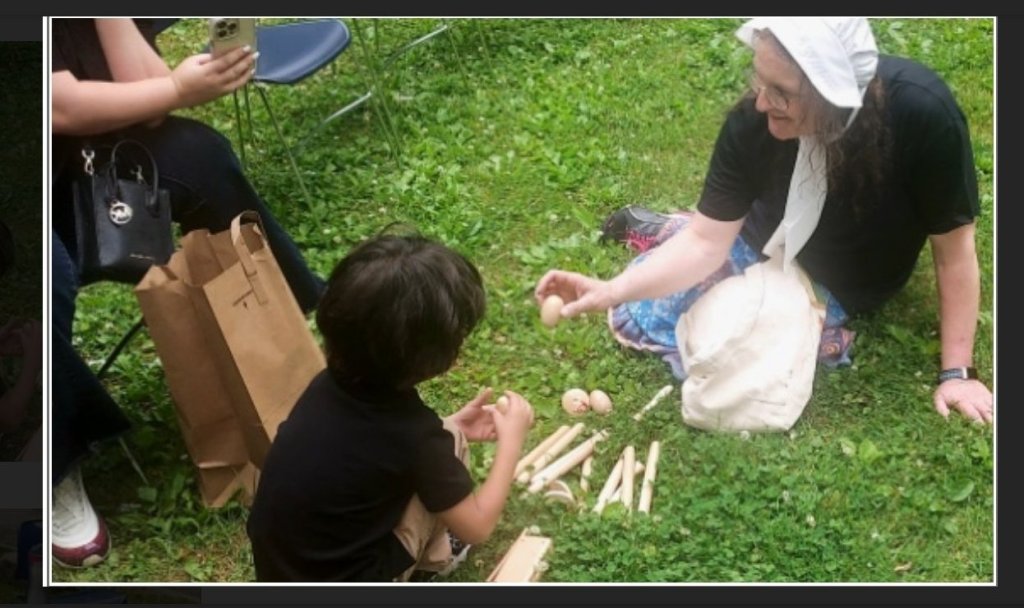
When Jesus uttered these words he likely shocked his followers – certainly the proper order was for children to emulate adults, and not the other way around. Adults were the teachers, children were to learn, and to upset that order shouldn’t be done.
In his book Spotting the Sacred, Bruce Main speaks of being childlike, but he points out one quality that has always meant a great deal to me in chapter 5 when he speaks of “unrehearsed congruence”. In the section where this term is used he is referencing the spontaneous prayer of a child and its effect on a man who heard that prayer.
I have in my own life often wished that I could find that spontaneity. Growing up, spontaneity and improvisation were things I could ill afford lest I show too much of myself. Being myself instead of who I was permitted to be resulted in harsh punishment. I learned to be aware and in control of what I said, how I moved, who I was with, simply so I could avoid beatings or other punishments. What I lost was spontaneity and authenticity. I managed to hold on to my curiosity, but it needed to be restrained to areas that were”acceptable”.
I also avoided children; not because I didn’t like children, but because I was told that people like me – people who struggled to simply be who they were told to be, would grow up to be the sort of people who would abuse children. Even around my own daughters, finding spontaneity was not possible. The fact that the individual who told me this was a serial abuser should have meant something. But in avoiding children, I lost something that has taken me many years to rediscover.
At the same time, being raised in a controlling and abusive environment, and finding recovery afterward has taught me something important; resiliency isn’t something that need be lost forever.
I found that one enemy of resiliency is resignation, while the path to resiliency, and to the Kingdom, as Jesus put it, is to “become like a child”. In my own case, that path involved the most child-like act of finding a friend; of being open to a relationship, of trusting.
For survivors of trauma, trust can be a dangerous word. For many of us, often as children, our trust was, in many cases, betrayed. We are not given as adults to trust easily; it is something we must re-learn. We must “become as children”, not entirely, but at least in part.
I have also found that in “becoming like a child”, at least in learning to trust, I have also learned to feel more deeply. I can feel joy, sorrow, and especially love much more deeply and viscerally than I could before. When I had put aside not childish, but childlike things, I had also walled myself off from being hurt. After all, big girls aren’t supposed to cry over little things, or things that are long past; at least not if we’re “emotionally stable”. But being childlike is a recognition that the “rules” of adulthood, especially our Western, puritanical, capitalist, ‘drag yourself up and get on with it’ attitudes, are mostly bullshit, and terribly harmful to the human condition. Rather than helping us heal and move on, these attitudes leave us with emotionally disfiguring scars and festering wounds as we seek to navigate life pretending that all is well and that we need no help or compassion.
In ‘becoming like a child’, we’re able to reach out when we need help and when we see another in need. We discover, at once, compassion and resiliency because they are both sides of the same coin.
Real healing looks different. Those who heal still carry reminders of past trauma, but it doesn’t leave them broken and disfigured with wide-open wounds. Instead, the stories of past trauma are woven into a rich and colorful tapestry that radiates strength and hope and which is a celebration of life. This isn’t to say that one must experience trauma in order to fully experience life; rather, I’m saying that those who have found a path to healing learn to integrate their previous experiences, even the traumatic ones, into the fabric of their being in such a way as to make that resulting tapestry more beautiful, richer, and stronger that it otherwise would have been.
We need to understand too what real compassion looks like. This is another part of us that has been harmed with our modern, puritanically and capitalistically influenced way of thinking. Too often when we hear of another’s problems we are quick to offer advice or solutions and forget that what many really need, especially early in their struggles, is to simply be heard and understood. When someone is facing, for example, a life altering medical diagnosis, they will certainly hear from many about the benefits of CBD, herbal remedies, and countless people who recommend some specialty treatment. Often though, what someone really needs is someone to simply hear them and to give them the space to come to terms with the change that is taking place in their life. What they need is a compassionate listener. What they need is a friend who will simply be there.
As children, there were many times when our friends could not solve our problems and we could not solve theirs. Often enough, our problems were their problems too. But those problems became easier to bear because those friends were their. When we can regain that childhood trust in each other and make each other’s lives easier, we are discovering part of what it means to “become like a child”.
Recently I was occasioned to take part in an extra-judicial proceeding that dealt with some abuse I experienced as a child. Alone, the experience would have been much more than would have been bearable in a healthy fashion. But I asked my best friend if she would be with me, and she went. What might have been a terribly stressful experience became instead something that was also healing, despite it’s nature, for both of us because the experience was shared. It brought us closer; we learned more about ourselves and about each other.
Perhaps that’s yet another part of both being childlike and resilient – being able to continue to grow and heal, to recognize our weaknesses, to know that there is yet much we can’t do alone. Sometimes we need to be content to wait and find what peace and joy we can in the here and now, despite what seemingly integrate things may otherwise be happening. Earlier in the book of Matthew, Jesus gave his familiar parable of the lilies of the field which neither spin nor sow, yet are dressed in more splendor than Solomon himself. They don’t toil, but God provides for them. Jesus’ point was not that one shouldn’t ever work, but rather that work and effort extended solely for the purpose of vanity was unnecessary. When we look at young children, we don’t see them worried about how they or their friends look; instead, what matters is the quality of the friendships they make, whether they play well together, whether they share, whether they care.
It’s only as we become older that physical beauty begins to take on as much, or in some cases more importance than inner beauty. It seems that we are taught to find distasteful those who do not conform to a particular aesthetic. We can become more like children by worrying less about physical appearance – our own as well as that of others, and more about character – especially our own.
Children are thirsty for knowledge. They are naturally curious about everything. They aren’t satisfied with “just because”, nor should we be. It may seem more grown up to not ask “why”, but perhaps that’s one reason we’re in such a mess right now. Maybe we need to ask “why” more. Why can’t we have something like a National Health Service in the US? Why do we need to rely so heavily on oil and the resulting pollutants? Why can’t we have clean air and water? Why can’t we have equal rights for all? Why must we fear that the rights we do have will be stripped away?
The difference we have was adults is that along with our childlike questioning, we also have adult autonomy. We can change our world, and we can change ourselves. While we may not be able to change our past, we can still correct the deficiencies we may have had in our upbringing. If there were things we didn’t learn, we can still learn them. If we were lacking the love of a family, we can yet find even that – this I can promise you because it happened in my own life.
What I can say about my life is that every truly good thing that happened to me began when I had trust, like that of a child.
 Morning Musings